Understanding Your Austria Vacation Home Options
Traditional Vacation Rental Investment Properties
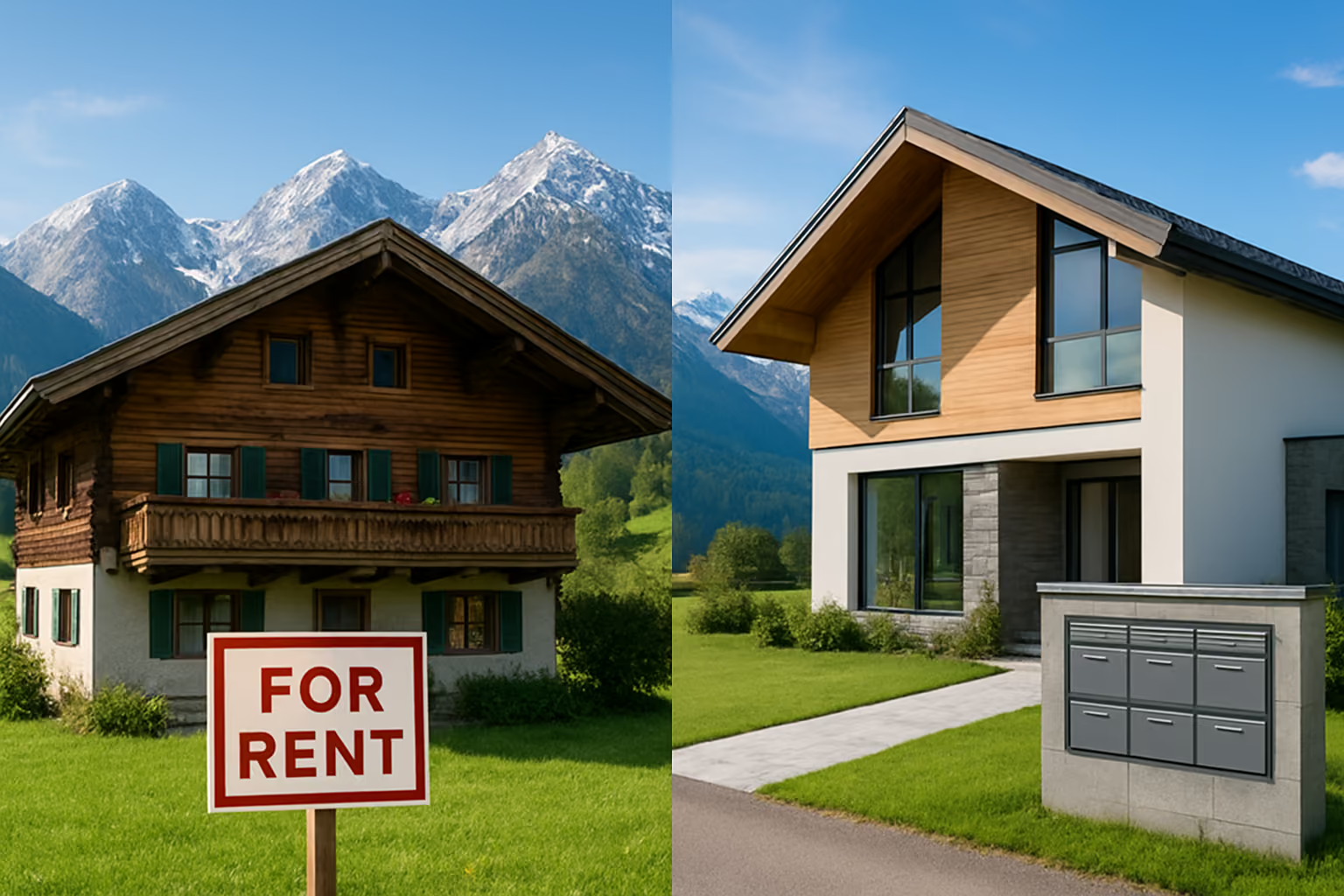
When considering Austria vacation property investments, you'll encounter "Tourist Residence" properties that offer an attractive combination of investment potential and personal use. These properties typically allow you 4 to 12 weeks of private use annually while generating rental income through professional management agencies during your absence, achieving net rental yields between 4-6% per annum.
Full Ownership of Second Homes
Your second option involves purchasing a "Second Home" (Zweitwohnsitz) property, which provides complete flexibility without usage restrictions or residency requirements. However, these properties are extremely rare, particularly in popular regions like Tyrol and Salzburgerland, where municipalities with over 16% existing second homes face new development restrictions since 2018.
Financial Investment Requirements and Costs

Initial Capital Requirements for Each Option
When purchasing property in Austria, your upfront costs extend far beyond the listed price. For traditional vacation rental purchases, expect total costs reaching 110-112% of the property value. The mandatory 3.5% property transfer tax and 1.1% registration fee are just the beginning—you'll also face notary fees ranging 2-5% plus VAT, potential realtor commissions of 3% plus VAT, and mortgage-related expenses if financing your purchase.
Co-ownership arrangements typically require lower initial capital since you're purchasing a fractional share rather than the entire property. However, you'll still encounter proportional transfer taxes, legal fees, and registration costs based on your ownership percentage, making careful financial planning essential for both investment approaches.
Ongoing Maintenance and Operating Expenses
Your monthly operating costs (Betriebskosten) will range €2-3.50 per square meter, covering garbage collection, sewerage, building insurance, repairs, and management company fees. These expenses apply regardless of whether you choose traditional ownership or co-ownership arrangements. For mortgage-financed properties, you'll face additional ongoing costs including property insurance at 0.1-0.3% annually and mandatory life insurance at 0.2-0.5% of your loan balance.
Utility expenses vary by consumption, with individual heating systems offering more control over energy costs compared to centralized systems that may include fixed monthly fees.
Property Management and Service Fees
Professional property management becomes crucial for vacation rentals, with fees varying based on service levels and property complexity. Your management costs will include regular maintenance coordination, guest services, and administrative oversight. Co-ownership arrangements often include built-in management structures, potentially offering economies of scale that reduce individual management burdens compared to sole ownership.
Banking relationships require ongoing account maintenance fees of approximately €30-60 annually, plus transaction costs for rental income processing and international transfers if you're managing the property from abroad.
Hidden Costs That Impact Your Bottom Line
Several unexpected expenses can significantly impact your investment returns. Non-EU citizens face additional permit fees (several hundred euros) and mandatory document translations costing €100-300 per contract. Property inspections for harmful substances range €200-600, while technical condition assessments add €300-800 to your expenses. These costs multiply when language barriers require professional interpretation services.
Tax implications create further complexity, with rental income subject to Austria's progressive tax rates of 20-55% depending on your total annual income. When eventually selling, you'll face capital gains tax on profits, making long-term financial planning essential for maximizing your investment's actual returns.
Revenue Generation Potential

Short-Term Rental Income Opportunities
When you invest in Austria vacation rentals, your revenue potential can be substantial. In Salzburg, a typical short-term rental generates a median revenue of €43K annually, with an impressive 76% occupancy rate and an average daily rate of €151.
Personal Use vs Investment Property Classification
Your property's classification significantly impacts your revenue generation strategy. While personal use properties offer you vacation time, investment-focused properties in Austria's tourist hotspots like Salzburg rank in the top 9% for short-term rental yield in Western Europe, making them highly profitable ventures.
Legal and Regulatory Considerations in Austria

Short-Term Rental Licensing and Permit Requirements
When operating vacation rentals in Austria, you'll need to navigate various regulatory frameworks that differ across the nine federal states. Each province has specific building laws and spatial planning regulations that govern short-term rental operations, requiring you to obtain proper permits from municipal authorities or district administration offices before listing your property.
Tax Implications for Different Ownership Types
Your ownership structure significantly impacts your tax obligations under Austrian law. Property acquisition triggers a 3.5% real estate transfer tax, while registration fees add approximately 1.1% of the property value. If you're financing through mortgages, expect additional 1.2% registration fees for lien entries in the land register.
Co-Ownership Agreement Legal Framework
Austrian civil law recognizes co-ownership (Miteigentum) as a legitimate property holding structure governed by the Austrian Civil Code and Condominium Act. Your co-ownership arrangements must be properly documented and registered with the competent district court to ensure legal enforceability and clear title registration.
Property Registration and Ownership Documentation
You must register your property rights with the Austrian land register administered by district courts to establish legal ownership. The registration requires certified purchase agreements, proof of citizenship, and potential approval from competent real estate acquisition authorities if you're a non-EU citizen, ensuring your ownership is publicly recorded and legally protected.
Usage Rights and Scheduling Benefits

Guaranteed Access Times with Co-Ownership
With co-ownership, you receive structured access to your vacation home through guaranteed time allocations. A typical 1/8 share provides you with approximately 6 weeks or 44 nights per year, designed to match how most people actually use second homes.
Flexibility vs Restrictions in Each Model
Co-ownership offers structured scheduling through dedicated mobile apps, where you book stays without coordinating directly with other owners. The system distributes access fairly across the year, making booking straightforward and eliminating the need for owner-to-owner negotiations that could create conflicts.
Property Management and Maintenance Advantages

Professional Management Services Comparison
When evaluating your Austria vacation property options, you'll discover that professional management services vary significantly between vacation rentals and co-ownership models. Full-service property management companies like Vacasa offer comprehensive solutions that handle everything from guest communications to maintenance coordination, ensuring your property operates smoothly year-round.
Quality Control and Property Standards
Your property's reputation and long-term value depend heavily on maintaining consistent quality standards. Professional management services implement rigorous inspection protocols and guest feedback systems to ensure your Austria vacation home meets expected hospitality standards, protecting both your investment and guest satisfaction ratings.
Long-Term Financial Performance Analysis

Capital Appreciation Potential by Ownership Type
When evaluating long-term financial performance, your ownership structure significantly impacts capital appreciation potential. Full vacation rental ownership typically offers unlimited appreciation upside, as you benefit from 100% of property value increases over time. However, this also means bearing complete exposure to market downturns and property value fluctuations.
Co-ownership arrangements generally provide proportional appreciation benefits based on your ownership percentage, but with reduced risk exposure. While your upward potential is capped by your ownership share, you also have protection against significant losses through shared risk among multiple owners.
Exit Strategy and Resale Options
Your exit strategy options vary considerably between ownership models. Traditional vacation rental ownership provides maximum flexibility, allowing you to sell at any time based on market conditions and personal circumstances. You retain complete control over timing, pricing, and buyer selection, though you also bear full responsibility for marketing costs and potential losses during unfavorable market periods.
Co-ownership structures typically involve more complex exit procedures, often requiring approval from other owners or adherence to predetermined buyout formulas. While this may limit your immediate liquidity, it can also provide built-in buyer networks and established valuation methods that simplify the exit process.
Return on Investment Calculations
Based on reference data, vacation rental ROI calculations should account for your total investment cost, including purchase price, closing costs, furnishing expenses, and operating reserves. For full ownership, you can expect cash-on-cash returns typically ranging from 5% to 10% in well-performing markets, with some high-demand locations achieving returns exceeding 12%.
Co-ownership models may show different ROI profiles due to shared expenses and professional management structures. Your cash-on-cash return calculation becomes: (Annual Cash Flow ÷ Your Cash Invested) × 100, where your cash invested reflects only your proportional ownership stake rather than the full property value.
Risk Assessment for Each Ownership Model
Your risk exposure differs substantially between ownership approaches. Full vacation rental ownership concentrates all operational, financial, and market risks on you alone. You face complete exposure to vacancy rates, seasonal fluctuations, maintenance costs, and regulatory changes. However, you also retain full control over risk mitigation strategies and property management decisions.
Co-ownership distributes these risks among multiple parties, reducing your individual exposure to catastrophic losses or extended vacancy periods. While this shared risk structure provides stability, it may also limit your ability to implement rapid changes or optimize performance based on your specific preferences and market insights.
Making the Right Choice for Your Situation

Assessing Your Usage Patterns and Needs
Before choosing between vacation rentals and co-ownership, you need to clarify your primary objectives. Are you seeking a property to create lasting memories for yourself and future generations, or do you want a getaway spot for just the next few years? Perhaps your primary focus is on investment potential rather than personal use.
Evaluating Your Risk Tolerance and Budget
Consider your financial capacity for shared responsibilities versus sole ownership. Joint ownership structures offer shared financial burden and risks, making them attractive for those seeking to minimize individual exposure. However, you must weigh this against potential disagreements over usage, maintenance, or selling decisions that can cause conflicts among co-owners.

The decision between Austria vacation rentals and co-ownership ultimately comes down to your financial priorities, usage patterns, and management preferences. If you plan to use your Austrian vacation property frequently throughout the year and want complete control over your investment, traditional ownership with rental income potential might justify the higher upfront costs and ongoing responsibilities. However, if you're seeking luxury vacation experiences without the burden of full ownership costs, property management headaches, or the uncertainty of rental regulations, co-ownership presents a compelling alternative.
Co-ownership allows you to access premium Austrian properties that might otherwise be financially out of reach, while sharing maintenance costs, property management responsibilities, and regulatory risks with other like-minded owners. You'll avoid the common scenario where second home owners use their property only a few weeks per year while carrying 52 weeks of expenses. By carefully evaluating your usage needs, financial capacity, and desired level of involvement in property management, you can make an informed choice that aligns with your vacation home goals and ensures your Austrian property investment delivers both financial sense and personal satisfaction for years to come.