
This guide is for anyone seriously considering a second home purchase—from pre-retirees planning their future retreat to families wanting a regular vacation spot to investors eyeing rental income potential. We'll help you figure out if you can truly afford this major financial commitment.
We'll break down the real financial investment required, including those sneaky hidden costs that add up fast. You'll also learn about the tax implications and ongoing expenses that many buyers don't see coming. Plus, we'll give you a reality check on rental income expectations and how a second home might impact your overall lifestyle and financial goals.
By the end, you'll have the clear picture you need to make a smart decision about whether a second home fits your budget and life.
Understanding the True Financial Investment Required

Higher Down Payment Requirements for Second Homes
Second home mortgages require significantly higher down payments than primary residence loans. While you might secure a primary home with just 3% down, vacation homes demand a minimum 10% down payment—and that's only if you have excellent credit and low debt ratios. Most lenders prefer at least 20-25% down, especially for borrowers with credit scores below 680 or higher debt-to-income ratios.
Managing Dual Mortgage Payments and Debt-to-Income Ratios
Qualifying for a second home mortgage means proving you can handle dual mortgage payments without rental income assistance. Lenders typically cap debt-to-income ratios at 45%, encompassing both mortgage payments plus all existing debts. Unlike investment properties, anticipated rental income cannot be factored into qualification criteria, requiring borrowers to demonstrate sufficient income from other sources to manage both properties comfortably.
Cash Purchase Considerations and Liquidity Needs
Beyond the down payment, second home buyers must maintain substantial cash reserves—typically 2-6 months of mortgage payments for both properties. Well-qualified wage earners need at least two months of reserves, while self-employed borrowers require six months minimum. Having 12 months of cash reserves can help compensate for slightly lower credit scores or higher debt ratios during the approval process.
Hidden Costs That Add Up Quickly

Property Taxes and Local Assessment Variations
Property taxes can be surprisingly high in sought-after vacation destinations, though they vary significantly by location. If you're coming from high-tax areas like New York or New Jersey, you might find lower rates, but many desirable vacation spots impose substantial annual assessments that can strain your budget.
Higher Insurance Premiums and Climate-Related Coverage
As climate change intensifies weather-related disasters like wildfires and hurricanes, homeowners insurance costs are rising dramatically. Some insurers are completely pulling out of high-risk markets in California and Florida, making coverage impossible to obtain. Rising seas also increase insurance costs for coastal properties, while flood insurance may not provide adequate coverage if you're relying on rental income to offset expenses.
Tax Implications and Legal Considerations

Complex Tax Rules for Personal vs Rental Use
Now that we've examined the upfront costs, understanding the tax implications becomes crucial for second home ownership. Mortgage interest on your second home remains tax deductible, but significant limitations apply based on when you acquired the property and how you use it.
Mortgage Interest Deduction Limitations
For homes acquired before December 16, 2017, you can deduct mortgage interest on up to $1 million of combined debt ($500,000 if married filing separately) across your primary and second residences. However, properties purchased after this date face reduced limits of $750,000 ($375,000 if married filing separately). If you rent out your second residence while also using it personally, additional complex rules may further restrict your mortgage interest and property tax deductions.
State and Local Tax Variations
State and local real property taxes on your second home are generally deductible, but the total deduction for all state and local taxes is capped at $10,000 annually ($5,000 if married filing separately). This includes property taxes, income taxes, and sales taxes combined. Importantly, you cannot deduct assessments for local improvements like sidewalks or water mains, nor periodic service charges such as trash collection fees, as these don't qualify as deductible property taxes.
Ongoing Maintenance and Management Expenses

Essential Home Furnishing and Setup Costs
Furnishing a second home represents a significant initial investment beyond the purchase price. Professional furniture packages start around $5,000 for basic setups, while luxury packages can exceed $20,000, plus additional consultation, design, delivery, and installation fees. Many owners underestimate these costs when budgeting for their second home purchase.
Regular Upkeep and Seasonal Maintenance
Previously covered financial commitments extend into ongoing maintenance expenses. Experts recommend budgeting 1% of the purchase price annually for repairs and upkeep, which doesn't include professional management services. Second homes require the same maintenance as primary residences, with the added challenge of remote monitoring and coordination of services like gardeners, painters, handymen, and snow removal contractors.
Property Management and Caretaking Services
With this in mind, professional property management becomes essential for distant second homes. Management fees vary significantly based on location and services, ranging from monthly flat fees to 8-12% of mortgage payments for basic maintenance, or 15-50% of rental income for full-service management. These services provide routine maintenance, weekly inspections for unoccupied homes, and rental management for investment properties, offering invaluable peace of mind when you're not present.
Rental Income Potential and Reality Check
14-Day Tax-Free Rental Rule and Its Limitations
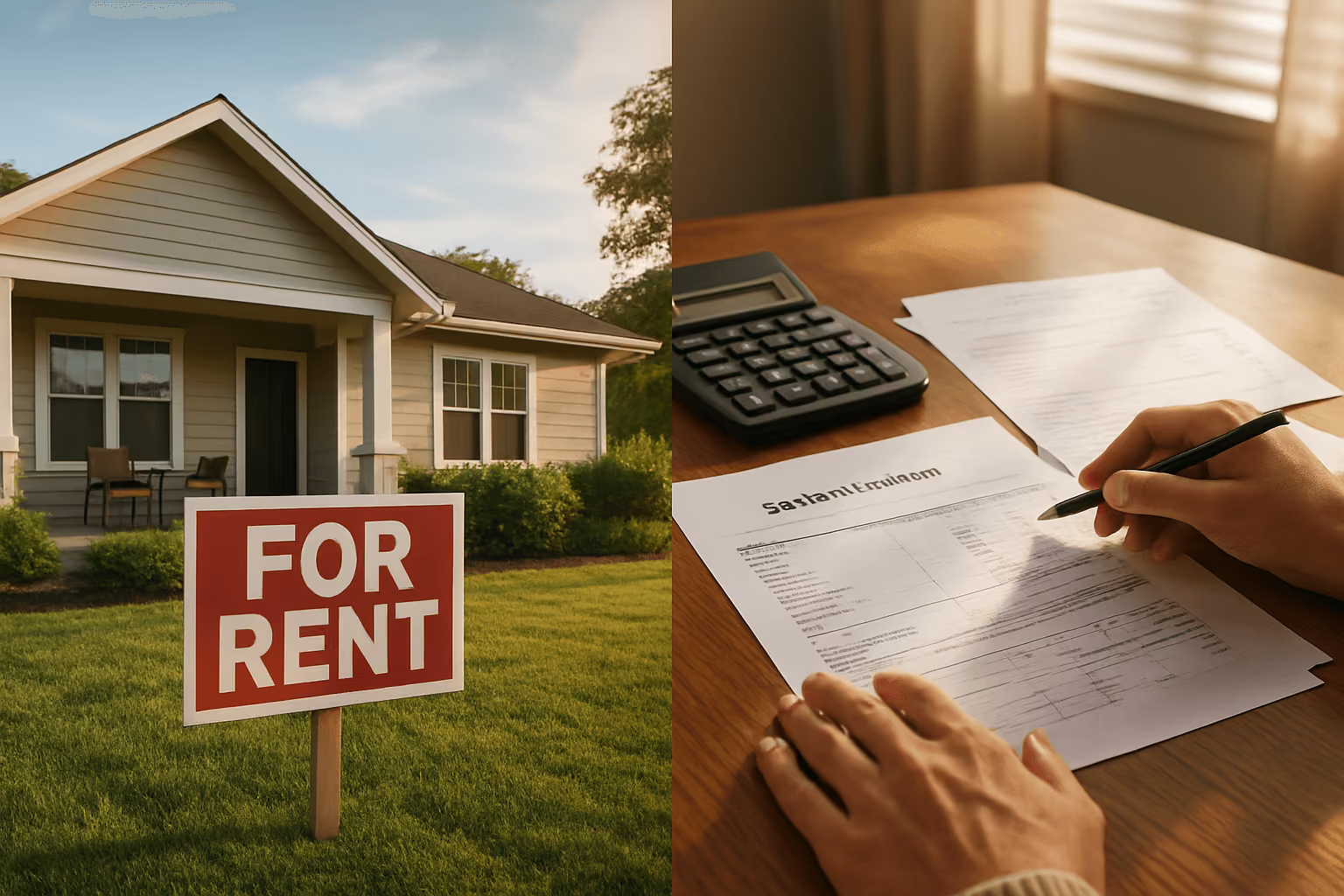
If you rent your second home for 14 days or less during the year, you may not need to report this income to the IRS. This tax-free rental rule provides a limited opportunity to generate some income without tax consequences, but it significantly restricts your earning potential.
Investment Property Classification Requirements
When you rent your second home for more than 14 days annually, the IRS classifies it as an investment property. This classification changes the tax treatment substantially - while you might be able to deduct mortgage interest and real estate taxes against your rental business income, you'll lose the ability to deduct these costs on your personal income tax return like you could with a personal residence.
Balancing Personal Use with Rental Profitability
If you use your second home for both personal enjoyment and rental income, you face additional tax complexities and may not be eligible for all the deductions that a dedicated rental property would provide. The IRS views rental properties as businesses, not hobbies, requiring careful consideration of how mixed-use affects your overall tax strategy and income potential.
Lifestyle Impact and Opportunity Costs

Reduced Travel Flexibility to Other Destinations
Now that we've covered the financial implications, it's important to consider how second home ownership fundamentally changes your vacation patterns. Once you own a second property, you'll naturally feel compelled to use it to justify the investment, which can significantly limit your travel to other destinations. As noted by financial advisors, you may experience a "vacancy rate of about 50 percent for both your primary and secondary homes," meaning you're essentially splitting your time between two locations rather than exploring diverse travel experiences.
Time Management Challenges for Busy Professionals
With this constraint in mind, managing a second home presents substantial time commitments that many busy professionals underestimate. Property management becomes time-consuming and stressful, particularly if you choose to rent the property when not in use. Even without rental activities, regular maintenance, repairs, and upkeep require ongoing attention and coordination, especially when you're not physically present at the location.
Making the Smart Decision for Your Situation

Financial Readiness Assessment Factors
Before purchasing a second home, evaluate your complete financial picture beyond just having a down payment. Your credit score should be 680 or higher, with debt-to-income ratio below 45%. Ensure you have an emergency fund, are contributing to retirement, and can accommodate monthly expenses for both mortgages while maintaining cash reserves that lenders typically require.
Family Life Stage Considerations and Future Planning

Consider how a second home fits your current life stage and long-term goals. Factor in the extra time and responsibility demanded by property ownership, travel costs to the property, and ongoing maintenance needs. Evaluate whether prioritizing high-interest debt repayment might be more beneficial than taking on additional mortgage obligations at this time.
Owning a second home represents a significant financial commitment that extends far beyond the initial purchase price. From higher down payments and dual mortgage obligations to ongoing maintenance costs, property taxes, and insurance premiums, the true cost of vacation property ownership can easily exceed many buyers' expectations. The tax implications become particularly complex when rental income enters the equation, and the hidden opportunity costs—including reduced travel flexibility and the time investment required for remote property management—deserve careful consideration alongside the financial calculations.
Before taking the plunge into second home ownership, honestly assess whether your budget can comfortably handle the full spectrum of expenses while still meeting your other financial goals. Consider your long-term lifestyle preferences, the realistic rental income potential in your target market, and whether you have reliable local support for property management. While a vacation home can provide wonderful family memories and potential investment returns, it's not a decision to rush into. Run the numbers thoroughly, consult with financial and tax professionals, and ensure that this major purchase truly aligns with both your current financial situation and your future plans.