Prime Investment Regions for Co-Ownership Properties

Istria Peninsula: Luxury Villas and Mediterranean Charm
The Istria Peninsula, often referred to as the "Tuscany of Croatia," stands out as a premier destination for co-ownership property investments. Located in northwestern Croatia, this region attracts sophisticated investors with its picturesque rolling hills, medieval villages, and distinctive Mediterranean atmosphere. The area's popularity among foreign buyers has created a robust luxury property market, making it ideal for co-ownership arrangements.
Property prices in key Istrian cities like Rovinj and Pula typically range from €2,500 to €4,000 per square meter, reflecting the region's premium positioning in Croatia's real estate market. These price points are particularly attractive for co-ownership investors, as they can access luxury properties with stunning views and historic charm while sharing the investment burden among multiple parties.
The region's appeal lies in its unique combination of cultural heritage, natural beauty, and proximity to both Italy and Slovenia, making it easily accessible to international co-owners. Istria's well-developed tourism infrastructure ensures consistent rental potential, while the area's reputation as a luxury destination helps maintain property values over time.
Dalmatia Coast: Dubrovnik, Split, and Zadar Market Opportunities
The Dalmatia region represents Croatia's most tourist-heavy coastline, stretching from Zadar in the north to Dubrovnik in the south, offering exceptional co-ownership opportunities across varying price points. This diverse region provides investors with options ranging from ultra-premium historic properties to more accessible coastal investments.
Dubrovnik commands the highest property prices in the region, with values reaching up to €5,000 per square meter, particularly within the UNESCO World Heritage historic center. For co-ownership investors, these premium properties offer unparalleled prestige and strong rental potential due to Dubrovnik's status as a world-renowned tourist destination.
Split presents a more balanced investment opportunity, with property prices ranging from €3,000 to €4,000 per square meter. As Croatia's second-largest city and a major transportation hub, Split offers co-ownership investors both tourism appeal and year-round rental potential from business travelers and long-term residents.
The consistent flow of millions of annual tourists to the Dalmatian coast ensures strong demand for holiday rentals, making this region particularly suitable for co-ownership arrangements focused on rental income generation. The established tourism infrastructure and international recognition provide stability for property values.
Croatian Islands: Hvar, Brač, and Korčula Investment Potential
The Croatian islands present compelling co-ownership opportunities for investors seeking alternatives to mainland coastal properties, offering lower entry prices with significant growth potential. Islands such as Brač and Hvar provide attractive investment alternatives with growing tourist appeal and more accessible price points than Split or Dubrovnik.
These island properties typically offer better value propositions compared to their mainland counterparts while still benefiting from the Adriatic's tourism boom. The exclusivity of island living appeals to luxury travelers, creating strong rental demand during peak seasons, which is particularly beneficial for co-ownership arrangements where investors can coordinate usage schedules.
The developing tourism infrastructure on these islands presents growth opportunities, as improved accessibility and amenities tend to drive property appreciation over time. Co-ownership investors can benefit from this development trend while spreading the investment risk across multiple parties.
Kvarner Riviera and Zagreb Urban Investment Options
The Kvarner Riviera offers co-ownership investors access to coastal properties at more moderate price points while maintaining strong rental potential. The region's proximity to Central European markets makes it particularly attractive to tourists from neighboring countries, ensuring consistent demand.
Zagreb, Croatia's capital and economic center, presents a different co-ownership investment profile entirely. With property prices ranging between €2,000 and €3,500 per square meter, Zagreb offers affordability compared to other European capitals while providing the stability of urban real estate investment.
The capital city's emerging neighborhoods and suburbs present even lower price points, making these areas particularly attractive for co-ownership investors seeking long-term appreciation potential. Zagreb's role as Croatia's political, cultural, and economic hub ensures consistent rental demand from business travelers, expatriates, and students.
Urban co-ownership properties in Zagreb benefit from year-round rental potential, unlike seasonal coastal properties, providing more predictable income streams for investors. The city's continuing economic development and EU membership stability make it an attractive option for conservative co-ownership investment strategies.
Risk Management and Investment Protection Strategies

Common Legal Pitfalls and How to Avoid Costly Mistakes
Foreign investors face significant legal challenges when purchasing co-ownership properties in Croatia, stemming largely from the country's complex post-communist legal framework. The most critical pitfall involves formerly socially-owned real estate, where land registry data may be inaccurate or incomplete. Unlike typical property transactions where land registries enjoy public faith, formerly socially-owned properties carry suspended protections, meaning buyers cannot rely on registry data as truthful and accurate.
Restitution claims present another major legal trap. The Law on Restitution of Property Confiscated During the Yugoslav Communist Regime grants former owners rights to reclaim expropriated properties. Since registration of pending restitution claims isn't mandatory, investors must conduct thorough due diligence to identify potential claims that could invalidate their purchase.
Non-EU buyers face additional regulatory hurdles requiring Ministry of Justice approval before acquiring real estate. This approval serves as a condition precedent for purchase agreement validity, and the process can extend several months. However, foreign nationals can circumvent these restrictions through share deals - acquiring Croatian companies that own the property rather than direct property purchases.
Hidden Costs and Unexpected Financial Obligations
Co-ownership property investments in Croatia carry substantial tax obligations that can significantly impact investment returns. Direct property purchases (asset deals) trigger real estate transfer tax of 5 percent, while certain transactions may incur both 25 percent value-added tax on building value and additional transfer tax on land value.
The tax structure varies significantly based on transaction type and buyer classification. EU nationals face fewer restrictions but still encounter substantial costs. Strategic structuring can help minimize tax burden - contributions of real estate during company formation, share capital increases, or transactions during mergers and spin-offs are exempt from real property transfer tax.
Land transfer tax complications add another layer of unexpected costs. Historical inconsistencies between land registry data and actual property transactions mean investors may face retroactive tax obligations or registration fees to correct property records. These legacy issues from the socialist era continue affecting property transactions decades later.
Property Dispute Prevention and Resolution Methods
Croatia's judicial system improvements have enhanced dispute resolution capabilities, though challenges remain. The country improved its World Bank ranking for property registration from 109th in 2010 to 60th in 2016, indicating enhanced administrative efficiency. However, legal insecurity persists due to accumulated judicial case backlogs.
Preventive measures include comprehensive title searches extending beyond standard registry checks to identify potential restitution claims and ownership disputes. Investors should verify property history through multiple sources, including municipal records and historical documentation, particularly for properties with socialist-era ownership.
The three-year statutory term for challenging property acquisitions provides some protection for good-faith buyers relying on land registry data. However, this protection doesn't apply to formerly socially-owned properties, making thorough legal vetting essential before purchase.
Long-Term Investment Security and Market Stability Factors
Croatia's economic trajectory supports long-term property investment security. With GDP growth of 3.8 percent in 2024 - significantly exceeding the EU average of 1 percent - and projected growth of 3.3 percent in 2025 and 2.9 percent in 2026, the economic foundation appears stable. The country's A- credit rating from major agencies reflects institutional stability.
EU membership provides additional investment protection through harmonized legal frameworks and dispute resolution mechanisms. Nearly $30 billion in EU funding through 2030, including $10 billion through the Recovery and Resilience Facility, will support infrastructure development and economic growth.
Regional market dynamics favor coastal properties, particularly in Istria, Dalmatia, and Dubrovnik, driven by tourism sector growth generating $16.2 billion in 2024 revenue. The tourism sector's 25 percent GDP contribution creates sustainable demand for co-ownership properties in these premium locations.
However, investors should monitor inflation trends, which reached 4.5 percent in December 2024, above the eurozone average of 2.4 percent, though it's projected to moderate to 2 percent by 2026.
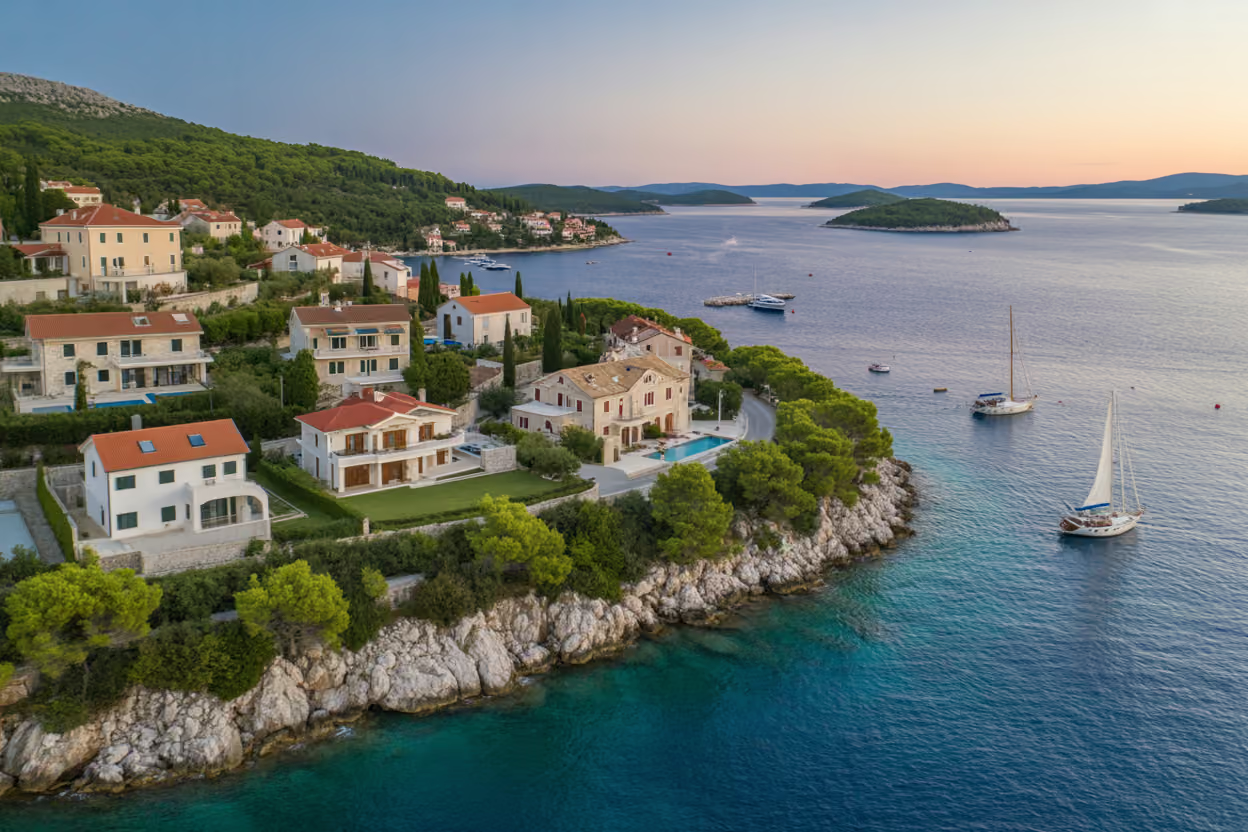
Croatia's diverse regions offer compelling opportunities for co-ownership property investments, from the luxury markets of Istria and Dalmatia to the growing urban centers like Zagreb. Each region presents unique advantages - whether it's the Mediterranean charm and strong rental yields of coastal properties, the stability of urban markets, or the exclusive appeal of island locations. Understanding the specific characteristics, legal requirements, and market dynamics of each region is essential for making informed investment decisions that align with your financial goals and lifestyle preferences.
Successful co-ownership property investment in Croatia requires thorough due diligence, proper legal guidance, and a clear understanding of the regulatory framework for foreign buyers. By carefully evaluating regional markets, securing appropriate legal representation, and implementing sound risk management strategies, investors can capitalize on Croatia's stable property market while enjoying the benefits of European Union membership, Eurozone stability, and the country's growing tourism sector. Take the time to research your chosen region thoroughly and work with experienced local professionals to ensure your Croatian property investment delivers both financial returns and personal satisfaction.