


Understanding Co-Ownership Holiday Homes in Croatia
What Co-Ownership Really Means for Your Croatian Property
When you enter into co-ownership of a Croatian holiday home, you're essentially purchasing a fractional share in a premium property that would typically be beyond your individual budget. Your ownership stake represents both a legal interest in the property and the right to use it for predetermined periods throughout the year. This arrangement transforms the dream of owning a seaside holiday home into an accessible reality, allowing you to enjoy all the benefits of property ownership while sharing both the costs and responsibilities with other co-owners.
Your fractional ownership in Croatia operates on a straightforward principle: you own a percentage of the property deed, which corresponds directly to your usage rights and financial obligations. This means that if you purchase a 25% share, you're entitled to use the property for approximately three months per year, while also being responsible for 25% of all ongoing costs including maintenance, insurance, and property management fees.
How Fractional Ownership Works in the Croatian Market
The Croatian fractional property ownership market has evolved to accommodate the growing demand for accessible vacation home ownership. When you participate in this model, you're joining a carefully structured arrangement where multiple parties share ownership of a single property, each holding legal title to their specific fraction.
Your fractional share in the Croatian market typically comes with predetermined usage periods that are scheduled in advance, ensuring you know exactly when you can enjoy your property. The scheduling system often rotates yearly, so you're not restricted to the same weeks each year, giving you variety in your holiday experiences throughout different seasons.
The Croatian market has embraced this model particularly well because it addresses the challenge many face when considering vacation home ownership: the substantial upfront investment and ongoing costs that come with sole ownership. Through fractional ownership, you can access premium properties in Croatia's most desirable coastal locations without bearing the full financial burden alone.
Why Co-Ownership Beats Traditional Timeshares
Your co-ownership arrangement in Croatia offers significant advantages over traditional timeshare models. Unlike timeshares, where you typically purchase the right to use a property for specific weeks without actual ownership, co-ownership grants you a real ownership stake in the property itself. This means you benefit from potential property appreciation and have actual equity in your investment.
The key difference lies in the legal structure: while timeshares often involve complex point systems and limited flexibility, your co-ownership arrangement provides clear, predictable access to your property. You're not subject to the restrictions and fees that plague many timeshare operations, and you maintain greater control over how the property is managed and maintained.
Additionally, co-ownership arrangements typically involve higher-quality properties and more personalized service. Since you're an actual owner rather than merely purchasing usage rights, you have a vested interest in maintaining the property's value and condition, creating a community of invested stakeholders rather than temporary users.
Legal Structure and Property Rights in Croatia
Your property rights in a Croatian co-ownership arrangement are governed by Croatian property law, which recognizes fractional ownership as legitimate property ownership. When you purchase your share, you receive actual title to your percentage of the property, recorded in the official Croatian land registry. This legal recognition provides you with the same fundamental rights as any property owner in Croatia, proportionate to your ownership percentage.
The legal structure typically involves either holding your share as tenants in common or through a specially formed legal entity that owns the property on behalf of all co-owners. Your specific rights include the ability to sell your share (subject to any right of first refusal agreements with other co-owners), pass it on through inheritance, and participate in major decisions affecting the property.
Croatian law provides strong protections for property owners, including foreign nationals, ensuring that your investment is secure and your rights are enforceable. The legal framework also establishes clear procedures for resolving disputes between co-owners and managing the property effectively, giving you confidence in the stability of your investment arrangement.
Financial Benefits of Croatian Holiday Home Co-Ownership

Share Purchase Costs and Ongoing Expenses with Other Owners
When you enter into Croatian holiday home co-ownership, you'll immediately benefit from dividing substantial property costs among multiple owners. With a typical 1/8 fractional ownership structure, your initial purchase price represents only a fraction of what you'd pay for sole ownership of the same premium coastal property. This cost-sharing extends well beyond the initial purchase to encompass all ongoing expenses that make property ownership financially sustainable.
Your shared ownership structure means you'll split the property transfer tax (3% of market value if the seller didn't pay PDV), notary verification fees (approximately 6 euros per contract), and land registry registration costs (around 30 euros) among all co-owners. Real estate agency fees, which typically range between 2% to 4% of the purchase price plus 25% VAT, are also divided proportionally, significantly reducing your individual transaction costs compared to sole ownership.
The ongoing financial burden becomes remarkably manageable when distributed across multiple owners. Property taxes, which can be substantial for premium coastal properties in Croatia, are split equally among all fractional owners based on their ownership percentage. Similarly, comprehensive property insurance costs are divided, ensuring your individual contribution remains minimal while maintaining full coverage protection for the entire property.
Access Premium Croatian Coastal Properties at Fraction of Full Price
Co-ownership opens doors to luxury Croatian coastal properties that would otherwise be financially out of reach for individual buyers. Properties along the Dalmatian Coast, particularly on sought-after islands like Hvar, Brač, and Korčula, command premium prices due to structural supply constraints imposed by Croatia's Maritime Domain and Coastal Land Act. These regulations strictly limit coastal development, creating scarcity that drives property values upward.
Through fractional ownership, you can access stone villas on Dalmatian islands, waterfront apartments in Split or Dubrovnik, or secluded retreats in Istria at prices that represent genuine value compared to sole ownership. A luxury villa that might cost €2.4 million for full ownership becomes accessible through 1/8 co-ownership starting from around €300,000, placing premium Croatian coastal living within reach of buyers who value quality over quantity.
The Croatian property market benefits from sustained international demand, with the country regularly featuring among Europe's top five travel destinations. This growing profile, combined with supply constraints, creates favorable long-term value dynamics for properties in the premium segments where co-ownership is most active.
Split Property Taxes, Insurance, and Maintenance Costs
Your co-ownership arrangement ensures that all property-related expenses are proportionally divided among owners. Property taxes, which vary by location and property value, become manageable when split eight ways in a typical fractional ownership structure. Insurance premiums for comprehensive coverage, including damage protection that's recommended for all Croatian properties, are divided equally, ensuring full protection at minimal individual cost.
Maintenance costs, which can be significant for coastal properties exposed to salt air and seasonal weather variations, are shared among all owners. This includes routine seasonal maintenance, emergency repairs, and periodic renovations that maintain the property's condition and value. The professional management company handles all maintenance coordination, ensuring work is completed to high standards while costs remain transparent and fairly distributed.
Utility costs during occupancy periods are typically allocated based on usage, while baseline utilities for property maintenance during vacant periods are shared equally. This arrangement ensures the property remains in optimal condition year-round while individual cost exposure remains predictable and reasonable.
Offset Expenses Through Strategic Rental of Your Allocated Time
Your fractional ownership provides approximately 45 days of personal usage rights per year with a 1/8 share, perfectly aligned with the UK's post-Brexit 90-day Schengen limit. When you cannot use your allocated time, strategic rental of these periods can generate income to offset your ownership expenses, though this should not be considered guaranteed income.
Croatia has implemented short-term rental licensing requirements that vary by municipality and property type. Professional management companies handle these regulatory requirements, ensuring compliance while maximizing rental potential during your unused periods. The Croatian Adriatic's summer-peaked season means your most valuable weeks often fall within periods when rental demand and rates are highest.
The rental income potential varies significantly based on property location, quality, and seasonal timing. Properties in premium locations like Dubrovnik's historic area or prime Dalmatian island locations command higher rental rates, though you should approach rental income as a bonus rather than a primary financial motivation. The structural supply constraints that limit coastal development also support strong rental demand, as the stock of high-quality waterfront properties cannot be replicated at scale.
Your co-ownership investment benefits from Croatia's growing international tourism profile, with visitor numbers increasing from under 10 million annually in the early 2000s to over 20 million in recent years, supporting sustained rental market demand for quality properties in prime coastal locations.
Croatia's Prime Co-Ownership Destinations and Properties
Istrian Peninsula Properties and Venetian Coast Appeal
When you're considering co-ownership opportunities in Croatia, the Istrian Peninsula stands out as one of the most sophisticated and developed regions for international property investment. Your investment in this northwestern Croatian peninsula places you at the crossroads of Mediterranean and Central European cultures, where Venetian architecture meets Croatian hospitality.
The Istrian Peninsula offers you a unique advantage as a co-ownership investor because of its proximity to major European cities and established tourism infrastructure. Your property here benefits from excellent connectivity, with airports in Pula and nearby Slovenia providing easy access for you and your co-ownership partners throughout the year.
The coastal areas of Istria present you with diverse property options, from restored stone houses in hilltop villages to modern villas along the coastline. The region's appeal lies in its combination of cultural richness and natural beauty, making your co-ownership investment attractive for both personal use and rental potential during your allocated periods.
Dalmatian Coast Luxury Homes and Island Access
Moving south along Croatia's spectacular coastline, the Dalmatian Coast presents you with some of the most prestigious co-ownership opportunities in the Mediterranean. Your investment here provides access to crystal-clear waters that Jacques Cousteau once described as the cleanest and clearest in the world.
Split and the Central Dalmatian Coast offer you exceptional value for co-ownership investments. When you choose properties in Split's Old Town area, you're positioning yourself in a UNESCO World Heritage site with ocean views and pedestrian-friendly streets just steps from the beach. Your summers here will be warm and dry, while winters remain mild enough that you'll see locals swimming in the ocean as late as November.
The island options available to you through co-ownership are particularly compelling. Brac, Croatia's third-largest island in the Adriatic, sits less than an hour's ferry ride from Split. Your co-ownership here connects you to an island renowned for windsurfing, featuring vineyards, olive groves, and pine forests. The famous Zlatni Rat beach, with its distinctive tongue shape and pebbly golden surface, provides you with some of the most pristine bathing waters you'll find anywhere.
Hvar presents you with another exceptional co-ownership opportunity, recognized by Condé Nast Traveler as one of the world's top 10 most beautiful islands. Your investment here places you on Croatia's sunniest spot, boasting more than 2,700 hours of sunshine annually. The island's renaissance architecture in Hvar town, complete with 16th-century houses and a historic citadel, adds cultural depth to your co-ownership experience.
Zagreb and Inland Croatian Properties for Year-Round Use
While Croatia's coastline captures most international attention, your co-ownership investment in Zagreb and inland regions offers distinct advantages for year-round use. These properties provide you with a different Croatian experience, focusing on urban sophistication and cultural immersion rather than purely coastal lifestyle.
Zagreb, as Croatia's capital and largest city, presents you with co-ownership opportunities that remain vibrant throughout all seasons. Your investment here connects you to Croatia's economic and cultural heart, offering museums, theaters, restaurants, and business opportunities that don't depend on seasonal tourism patterns.
Coastal vs Mountain Properties for Different Lifestyle Preferences
Your choice between coastal and mountain properties in Croatia's co-ownership market depends entirely on your lifestyle preferences and usage patterns. Coastal properties along the Dalmatian Coast and islands provide you with access to Croatia's legendary 1,185 islands scattered like emeralds across the Adriatic Sea. These properties excel during summer months when you can take advantage of the extensive coastline - more than any other European country.
The rocky coastline characteristic of most Croatian coastal areas means your beachfront options may be limited, but the compensation comes in breathtaking ocean views and access to hidden coves and turquoise waters. Your coastal co-ownership investment benefits from established tourism infrastructure and international appeal.
Mountain and inland properties offer you different advantages, particularly if your co-ownership usage extends beyond summer months. These properties provide better value propositions and year-round accessibility, making them suitable for you if you prefer cultural experiences over purely recreational beach activities.
Legal Framework and Tax Implications for Foreign Buyers
Croatian Property Ownership Laws for Non-Residents in 2026
As a foreign buyer, you'll be pleased to know that Croatia has established a framework that equalizes the rights of domestic and non-resident property owners in most aspects of ownership and taxation. When you purchase property through co-ownership arrangements, you benefit from the same legal protections and obligations as Croatian citizens, particularly following the 2025 amendments to the VAT law.
Your property ownership rights are comprehensive, allowing you to use, rent, and sell your share of the co-owned property. However, you must understand that as a non-resident, you're required to register in the Croatian tax register within 8 days of starting any rental activity. This registration process ensures you're properly integrated into the Croatian tax system and can take advantage of available exemptions.
For co-ownership properties used for short-term rentals, you can utilize the small business tax exemption for income up to €60,000 annually, provided you arrange this through the cross-border scheme. This exemption applies whether you rent directly or through intermediary agencies, giving you flexibility in how you manage your property investment.
Property Transfer Tax and Annual Property Taxes
Now that we've covered ownership rights, let's examine the tax obligations you'll face. The most significant recent development is Croatia's new real estate tax that came into effect on January 1, 2025, replacing the previous tax on holiday homes. This tax directly impacts your co-ownership investment and ranges from €0.60/m² to €8.00/m² of usable floor area.
Your tax liability is calculated based on several factors including the property's location, age, and intended use. The municipality or city where your co-owned property is located makes the final decision on the specific tax rate within the prescribed range. You should note that properties used as permanent residences are exempt from this tax, as are properties rented under lease agreements for permanent residence lasting at least 10 months.
The tax authority requires you to submit information by March 31 each year regarding any changes in the assessed surface area or intended use of the property. You must also provide proof of rental agreements not registered with the tax authority and evidence of any tax exemption eligibility.
If your co-owned property is located in municipalities that previously didn't impose a holiday home tax and won't adopt a new real estate tax rate decision, you'll pay the minimum rate of €0.60/m². In areas that had a holiday home tax in 2024 but won't adopt new decisions, the rate remains the same as the previous tax.
Capital Gains Tax on Future Sale of Your Share
When planning your exit strategy, understanding capital gains implications becomes crucial. While the reference content doesn't provide specific capital gains tax rates, it emphasizes that the current market conditions present an opportune time for non-resident owners to consider selling, particularly given the significant rise in coastal property values.
Many non-resident owners are currently achieving better prices than they might in the future, placing sellers in the strongest negotiating position. You should consider that all properties, particularly houses, undergo renovation cycles approximately every 10 years, which can impact both maintenance costs and resale value.
Before making selling decisions, you need to evaluate whether your effort, commitment, and administrative obligations are proportional to your total profit. If administrative duties are delegated to management agencies, your net earnings will be further reduced, potentially affecting the overall return on your investment.
EU Citizenship Advantages and Brexit Impact on British Buyers
Previously, I mentioned the cross-border scheme benefits, which are particularly relevant for EU citizens. As an EU citizen, you're allowed to participate in property rental activities in the same capacity as domestic landlords, provided your delivery value doesn't exceed €60,000 across all countries where you use the cross-border scheme.
You can submit quarterly reports in your country of residence, which must include transactions carried out in all countries where you use the cross-border scheme. This streamlined reporting system significantly reduces administrative burden compared to non-EU arrangements.
For rental income below the mandatory VAT system threshold, you have the option to pay taxes in a lump-sum amount, calculated by multiplying the number of beds by the lump-sum tax amount set by the local government unit. The amount varies based on the tourism development index category of your property's location, ranging from €20.00-€300.00 per bed annually depending on the area's classification.
British buyers face additional complexities post-Brexit, though the reference content suggests that citizens of the European Economic Area and Switzerland maintain preferential treatment for cross-border taxation schemes, potentially placing British buyers at a disadvantage in terms of administrative efficiency and tax optimization opportunities.
The Professional Management Advantage

Hands-Off Property Maintenance and Upkeep Services
When you invest in a co-ownership holiday home in Croatia, one of the most significant advantages is the comprehensive property maintenance services that come with professional management. Your property management team will handle all aspects of regular maintenance, from basic upkeep to necessary repairs, ensuring your investment remains in pristine condition year-round.
Your management company will conduct regular monthly visits to inspect your property for any damage or maintenance issues. During these inspections, they'll test appliances, electrical installations, and plumbing systems to identify potential problems before they become costly repairs. You'll receive monthly reports via email detailing the condition of your property, complete with photographic evidence, so you can stay informed about your investment's status regardless of where you are in the world.
The maintenance services extend beyond just indoor care. Your management team will also handle basic garden and terrace maintenance as necessary, ensuring the outdoor spaces of your Croatian holiday home remain attractive and functional. When repairs are needed, your property managers will arrange for qualified professionals to address issues promptly, preventing minor problems from escalating into major expenses.
Professional Cleaning and Property Preparation Between Stays
Previously, we've discussed the financial benefits of co-ownership, and now you'll appreciate how professional cleaning services enhance the overall experience for all co-owners. Your property management team ensures that between each stay, your holiday home receives thorough professional cleaning to maintain the highest standards for every guest.
The cleaning service goes beyond basic housekeeping. Your management team will prepare the property specifically for your arrival, which can include purchasing groceries according to your preferences and preheating the property to ensure optimal comfort from the moment you walk through the door. This level of service means you can arrive at your Croatian holiday home and immediately begin enjoying your vacation without any preparation work.
Local Management Teams and 24/7 Support Systems
With this in mind, next, we'll examine how local management teams provide invaluable support for your co-ownership investment. Your property management company maintains local teams with intimate knowledge of the Croatian market and regulations. These professionals handle all correspondence with local accountants and arrange for the payment of utility bills, ensuring your property remains compliant with all local requirements.
The management team also provides key holding services and ensures access for you and other co-owners following predetermined instructions. When you need access to your property or when guests require entry, the local management team coordinates these logistics seamlessly. They also collect your post regularly and can open and translate emails and correspondence related to your property, removing language barriers that might otherwise complicate property ownership in Croatia.
Perhaps most importantly, your management team provides 24/7 support systems to address any urgent issues that may arise. Whether it's a plumbing emergency, electrical problem, or security concern, you can rest assured that any problems requiring quick response will be dealt with immediately by qualified professionals who understand the local market and service providers.
Technology Platforms for Booking and Property Updates
Now that we have covered the physical management aspects, modern property management companies utilize sophisticated technology platforms to streamline the co-ownership experience. These digital systems allow you to access real-time updates about your property's condition and coordinate usage schedules with other co-owners.
The technology platforms typically integrate booking systems that allow you to reserve your usage periods while ensuring fair access for all co-owners. Through these systems, you can receive immediate notifications about property updates, maintenance schedules, and any issues that require your attention. This technological integration ensures transparency and keeps all co-owners informed about their shared investment, making the co-ownership experience smoother and more enjoyable for everyone involved.
Fair Scheduling and Usage Rights
Rotating Priority Systems for Peak Season Access
When you enter into co-ownership of a Croatian holiday home, you'll need a fair system that ensures every owner gets their turn at the most coveted times of the year. A well-crafted fractional ownership agreement serves as your foundation, outlining everything from predictable operating costs to typical contract terms that keep booking simple and stress-free for every owner involved.
Your co-ownership agreement should establish a rotation system where the schedule shifts yearly, ensuring all owners experience different seasons and guaranteeing fairness over time. This approach prevents any single owner from monopolizing prime summer weeks year after year. Unlike a fixed-use system that assigns specific weeks annually with predictability but limited flexibility, the rotation system creates equity by cycling peak season access among all co-owners.
Consider implementing a draft system where owners select their preferred weeks annually, similar to fantasy sports drafts. This method offers you maximum control while maintaining fairness through structured selection processes. Your ownership percentage typically determines your draft order and the number of weeks you can select during peak seasons.
Holiday and Summer Booking Allocation Methods
Your co-ownership structure in Croatia should account for the country's distinct seasonal patterns, particularly the high-demand summer months along the Adriatic coast. The agreement must clearly define how you'll allocate these premium periods among co-owners, ensuring everyone receives fair access to Croatia's stunning coastline during peak tourist season.
A hybrid and rolling reservation system often works best for Croatian properties, combining planned weeks with last-minute booking opportunities. This approach balances security and flexibility, allowing you to secure guaranteed weeks while maintaining access to additional availability. Usage-based costs like utilities and cleaning can be divided per nights stayed or through fixed fees, making your financial obligations transparent and predictable.
Your agreement should specify rules for holiday periods, including Christmas, Easter, and Croatian national holidays, establishing clear protocols for allocation and any premium fees associated with these high-demand times.
Flexible Booking Through Digital Management Platforms
Modern co-ownership arrangements leverage digital platforms to streamline your booking experience. Professional management companies often provide online portals where you can view availability and make reservations seamlessly. These systems eliminate the complexity of coordinating between multiple owners while providing real-time access to scheduling information.
Your digital management platform should offer transparency in viewing other co-owners' bookings, available dates, and any restrictions or maintenance periods. The system typically allows you to book stays well in advance while also accommodating last-minute opportunities when other owners' plans change.
These platforms often include features for managing guest policies, coordinating property maintenance, and handling rental opportunities when you're not using your allocated time. The professional management advantage becomes clear through these streamlined digital solutions that remove the administrative burden from individual co-owners.
Resolving Scheduling Conflicts Through Professional Mediation
Despite the best-laid plans, scheduling conflicts may arise in your co-ownership arrangement. Your fractional ownership agreement should include comprehensive dispute resolution clauses that prevent conflict escalation and maintain harmony among co-owners. A strong agreement creates clarity around decision-making processes and establishes protocols for addressing disagreements.
Professional management plays a crucial role in mediating scheduling disputes objectively. These experienced teams understand the nuances of co-ownership dynamics and can propose fair solutions that respect everyone's interests. They maintain neutrality while ensuring the property remains accessible and well-maintained for all owners.
Your agreement should outline specific procedures for handling conflicts, including escalation paths from informal resolution to formal mediation. Clear communication channels and mutual respect among co-owners, supported by professional management handling daily logistics, form the foundation of successful co-ownership relationships. The mediation process should be swift and fair, ensuring minimal disruption to everyone's enjoyment of the Croatian property.
Essential Legal Documents and Agreements

Co-Ownership Agreement Structure and Key Clauses
Your co-ownership agreement forms the foundation of your Croatian holiday home venture, serving as the operating manual for your shared ownership arrangement. This legally binding document must address several critical areas to protect your investment and relationships.
The ownership structure represents your first fundamental decision. You'll need to determine how you hold title to the property and establish ownership percentages among all parties. Most co-owners choose between Tenants in Common (TIC) or Joint Tenancy with Right of Survivorship (JTWROS), each carrying different implications for inheritance, transferability, and individual rights. Your agreement must clearly specify these ownership percentages and how they translate to actual control over the property.
Financial responsibilities require detailed documentation within your agreement. You'll need to outline capital contributions including down payments, closing costs, and reserve funds. The agreement must specify how mortgage payments will be split, considering that all parties typically face joint and several liability. Property taxes, insurance premiums, and recurring expenses like utilities and maintenance fees need clear allocation formulas. Non-recurring expenses such as repairs, improvements, and emergency costs require predetermined approval thresholds and payment structures.
Decision-making protocols prevent future deadlocks by establishing voting rules and authority levels. Your agreement should define which decisions require unanimous consent versus majority approval, and include mechanisms for resolving deadlocks. Typical decisions requiring structure include repairs over specific monetary thresholds, refinancing options, rental arrangements, major renovations, and sale considerations.
Usage Rights, Responsibilities, and Exit Strategies
Your usage rights framework determines how you'll actually enjoy your Croatian holiday home throughout the year. The agreement must establish occupancy rules, guest policies, and scheduling mechanisms to ensure fair access for all owners. This includes defining peak season allocations, booking procedures, and any restrictions on third-party usage or short-term rentals.
Individual responsibilities extend beyond financial obligations to include maintenance duties and administrative tasks. Your agreement should designate who handles bill payments, insurance renewals, property inspections, and tax filings. Clear role definitions prevent assumptions and ensure essential tasks receive proper attention.
Exit strategies represent perhaps the most critical yet frequently overlooked aspect of co-ownership agreements. Every co-ownership arrangement eventually ends, whether through voluntary sale, buyout, death, or financial distress. Your agreement must establish buyout terms and valuation methods, typically involving professional appraisals by agreed-upon third parties. Right of first refusal clauses protect existing owners when someone wants to sell their share, allowing them to purchase at market value before external buyers enter the picture.
The exit process should include specific timelines and mechanics for unwinding the arrangement. This covers scenarios ranging from voluntary departures to involuntary situations like death, incapacity, or default on financial obligations. Without predetermined exit terms, you risk costly partition actions where courts force below-market sales to resolve disputes.
Dispute Resolution and Conflict Management Processes
Effective dispute resolution mechanisms protect both your investment and relationships when disagreements arise. Your agreement must include a structured escalation path rather than defaulting to expensive litigation.
Mediation typically serves as the first formal step, involving a neutral third party who facilitates discussions between co-owners. This process costs significantly less than litigation while preserving relationships and privacy. Your agreement should specify how mediators are selected and how mediation costs are shared.
Arbitration provides a more formal alternative where a neutral arbitrator makes binding decisions. This process offers faster resolution than court proceedings while maintaining confidentiality. Your agreement must specify whether arbitration decisions are binding and how arbitrators are chosen.
Some agreements include predefined escalation paths that automatically trigger specific processes based on dispute types or monetary thresholds. For example, financial disputes under certain amounts might require mediation, while larger disputes proceed directly to arbitration.
Insurance Coverage and Liability Protection
Comprehensive insurance coverage protects your Croatian holiday home investment from various risks while clarifying liability among co-owners. Your agreement must address property insurance requirements, including coverage amounts and carrier selection processes.
Liability insurance becomes particularly important in co-ownership situations where multiple parties could face exposure from accidents, property damage, or guest injuries. The agreement should specify minimum coverage levels and how premiums are shared among owners.
Additional insurance considerations include title insurance to protect against ownership disputes, and potentially umbrella policies for enhanced liability protection. Some co-ownership arrangements benefit from key person insurance that provides buyout funds if an owner becomes incapacitated or dies unexpectedly.
Your agreement must also address insurance claim procedures, including who has authority to file claims, how deductibles are handled, and how insurance proceeds are distributed. This prevents delays during stressful situations when quick decisions become necessary for property protection or repair.
Smart Buyer's Due Diligence Process

Evaluating Croatian Property Markets and Price Trends
When you're considering co-ownership in Croatia, understanding the current market dynamics becomes crucial for making informed decisions. The Croatian real estate market has demonstrated remarkable resilience with residential property prices growing by an average of 2% quarterly. To put this in perspective, an apartment that cost €183,000 seven years ago now sells for approximately €340,000, illustrating the significant appreciation potential.
You'll find that the average price per square meter has reached €3,400, with coastal properties commanding premium rates due to their proximity to the Adriatic Sea and strong tourism demand. Different regions offer varying investment opportunities - Istria villas for sale attract buyers seeking Mediterranean charm and proximity to Italy and Slovenia, while Dalmatia real estate encompasses iconic destinations like Dubrovnik, Split, and Zadar, each offering unique market characteristics.
The Croatian islands present exceptional opportunities for co-ownership investments. Hvar Island property commands luxury prices due to its vibrant nightlife scene, while Brač Island real estate offers tranquil settings with beautiful beaches. Korčula Island property combines rich history with stunning landscapes, appealing to those seeking authenticity. The Kvarner Riviera, particularly Opatija luxury property, attracts buyers with its elegant Austro-Hungarian architecture and sophisticated atmosphere.
For urban investments, Zagreb apartments provide stable rental demand from students and professionals, making them attractive for buy-to-let co-ownership arrangements. Croatia's membership in the EU, Schengen Area, and Eurozone significantly enhances property market stability, eliminating currency exchange risks and simplifying transactions for international co-owners.
Assessing Management Company Track Record and Services
Your co-ownership experience heavily depends on the quality of professional management. When evaluating management companies, you should examine their track record with similar properties and their experience handling international co-owners. Look for companies that demonstrate expertise in Croatian property law and have established relationships with local service providers.
A competent management company should provide comprehensive services including property maintenance, guest services during your stays, and coordination between co-owners. They should handle everything from routine upkeep to emergency repairs, ensuring your property maintains its value and appeal. The management team should also understand the unique challenges of managing properties for multiple international owners who may have different expectations and usage patterns.
You'll want to verify that the management company maintains proper insurance coverage, employs qualified staff, and has systems in place for transparent financial reporting. Their ability to maximize rental income during periods when you're not using the property can significantly impact your investment returns, especially in Croatia's robust tourism market.
Understanding Total Cost of Ownership Beyond Purchase Price
Beyond your initial co-ownership investment, you must account for ongoing expenses that can range from 4% to 30% of the property's value annually. The associated costs include real estate transfer tax of 3% for existing properties or VAT of 25% for new builds, legal fees ranging from 0.5% to 1.5% of property value, and notary fees calculated on a fixed scale.
Annual ownership costs include property tax of approximately 1.5% of the appraised property value, which is typically 70% of market value. If you generate rental income when not using your share, this income is subject to 12% income tax. You should also budget for management fees, insurance, utilities, and maintenance reserves that ensure the property remains in excellent condition.
When selling your co-ownership share, you'll face capital gains tax of 24% on the difference between sale and purchase prices, plus agency fees ranging from 2% to 4%. Understanding these costs upfront helps you make realistic financial projections and avoid unexpected expenses that could impact your investment returns.
Reviewing Co-Owner Compatibility and Property Rules
Perhaps the most crucial aspect of successful co-ownership lies in ensuring compatibility with your fellow co-owners and understanding the established property rules. You should carefully review the co-ownership agreement to understand usage schedules, decision-making processes, and each owner's responsibilities regarding property maintenance and improvements.
Property rules typically cover everything from guest policies and pet restrictions to renovation approvals and dispute resolution procedures. Understanding these rules before committing ensures alignment with your intended use and lifestyle expectations. Some co-ownership arrangements may restrict short-term rentals or require unanimous approval for major property changes.
You'll want to assess whether the other co-owners share similar property care standards and usage intentions. Conflicts often arise when some owners prefer luxury amenities while others prioritize cost minimization, or when usage patterns don't align with established scheduling systems. A thorough review of existing co-owner profiles and property history can provide insights into the harmony and satisfaction levels of current arrangements.
The legal framework governing your co-ownership should clearly define exit strategies, transfer procedures, and what happens if a co-owner defaults on their obligations. Understanding these mechanisms protects your investment and provides peace of mind knowing you have options if circumstances change.
Exit Strategies and Resale Considerations

Selling Your Croatian Co-Ownership Share on Open Market
When you decide to exit your co-ownership arrangement in Croatia, selling your share on the open market provides the most flexibility and potentially the highest return on your investment. Your ownership stake represents real equity in the property, which means you can transfer or sell it independently from other co-owners. This deeded ownership structure gives you significant control over your exit strategy.
The selling process typically begins with determining the current market value of your share. Since you hold a defined percentage of the property, your share's value will reflect that proportion of the home's current market worth. Professional appraisals and recent comparable sales in the area will help establish a fair asking price for your ownership interest.
Marketing your co-ownership share requires highlighting both the financial benefits and lifestyle advantages that attracted you initially. Potential buyers are often drawn to the reduced financial commitment, shared maintenance responsibilities, and access to luxury properties in Croatia's prime destinations. Your marketing approach should emphasize these benefits while being transparent about the co-ownership structure and existing agreements.
The transaction process for selling your share mirrors traditional real estate sales, with the added complexity of existing co-ownership agreements. Buyers will need to review and agree to the current usage schedules, management arrangements, and ongoing financial obligations. Having all documentation organized and readily available will streamline the sale process.
Right of First Refusal and Other Owner Preferences
Most co-ownership agreements include a right of first refusal clause, giving your fellow co-owners the first opportunity to purchase your share before you can offer it to external buyers. This provision protects the existing ownership group's interests and maintains stability within the arrangement.
When you decide to sell, you'll typically need to notify other co-owners in writing of your intention and provide them with the proposed sale terms. Existing owners then have a specified period, often 30 to 60 days, to decide whether they want to purchase your share at the offered price and terms.
If multiple co-owners express interest in buying your share, the co-ownership agreement should outline the process for handling competing offers. Some agreements allow the selling owner to choose the buyer, while others may require proportional division among interested parties or use a predetermined selection method.
The right of first refusal can sometimes limit your negotiating power, as you may need to accept the same terms you would offer to an external buyer. However, it also provides advantages by ensuring buyers who are already familiar with the property and committed to maintaining its standards.
Property Appreciation Potential in Croatian Markets
Croatia's real estate market has shown strong appreciation potential, particularly in coastal areas and popular tourist destinations. Your co-ownership investment benefits from this market growth, as your share's value increases proportionally with the overall property value.
The country's growing popularity as a vacation destination, combined with limited supply in prime coastal locations, creates favorable conditions for property appreciation. European Union membership has also enhanced market stability and attracted international investment, supporting long-term value growth.
Prime destinations like Dubrovnik, Split, and the Istrian Peninsula have demonstrated particularly strong appreciation rates. Properties in these areas benefit from consistent tourism demand, limited development opportunities, and increasing recognition as luxury destinations among international buyers.
Your co-ownership structure doesn't limit your ability to benefit from property appreciation. As market values increase, so does the value of your ownership share, providing the same equity building benefits as sole ownership but with reduced initial investment and ongoing costs.
Inheritance and Estate Planning for Co-Owned Properties
Estate planning for co-owned properties requires careful consideration of how your ownership share will transfer to your heirs. Your co-ownership interest is considered real property and can be included in your estate planning documents like any other asset.
Most co-ownership agreements address inheritance scenarios, often allowing ownership shares to transfer to heirs upon an owner's passing. However, surviving heirs must typically agree to abide by existing co-ownership agreements, including usage schedules, financial obligations, and property management arrangements.
Some co-ownership structures include buyout provisions that give surviving co-owners the option to purchase a deceased owner's share from the estate. These provisions can provide liquidity for heirs who prefer cash over ongoing property ownership responsibilities.
Working with estate planning professionals familiar with international property ownership ensures your Croatian co-ownership investment is properly integrated into your overall estate plan. This includes understanding tax implications for your heirs and ensuring smooth transfer processes that comply with both Croatian law and your home country's estate regulations.
Clear documentation and communication with your heirs about the co-ownership arrangement helps prevent confusion and ensures they understand both the benefits and responsibilities they would inherit with your ownership share.
Making the Co-Ownership Decision Work for You

Assessing Your Croatian Holiday Preferences and Usage Patterns
Before diving into the Croatian co-ownership market, you need to honestly evaluate how you plan to use your holiday home. Your usage patterns will directly influence which co-ownership arrangement works best for your lifestyle and financial goals.
Start by considering your typical vacation habits. Do you prefer extended stays during specific seasons, or do you take multiple shorter trips throughout the year? Croatia's Mediterranean climate offers long, warm summers and mild winters, making it attractive for various usage patterns. If you're drawn to peak summer months when the crystal-clear Adriatic waters are at their warmest, you'll need to ensure your co-ownership agreement provides adequate access during July and August.
Think about your flexibility with travel dates. Co-ownership typically involves scheduled usage periods, so rigid vacation requirements might not align well with shared ownership arrangements. However, if you can be flexible with your dates and enjoy Croatia's shoulder seasons, you'll likely find co-ownership more accommodating and cost-effective.
Consider whether you want to use the property exclusively for personal enjoyment or if rental income is part of your strategy. Croatia's growing popularity as a tourist destination creates excellent rental opportunities, particularly in regions like Istria, the Dalmatian coast, and the islands. If generating rental income is important, you'll want to understand how your co-ownership structure handles rental arrangements and income distribution.
Financial Readiness and Budget Planning for 2026 Purchase
With Croatia's relatively affordable real estate market compared to countries like Italy, Spain, or France, co-ownership makes luxury properties accessible at lower entry points. However, proper financial planning remains crucial for your 2026 purchase.
Beyond the initial purchase price, factor in ongoing costs that many buyers overlook. You'll encounter a 3% transfer tax, plus additional expenses for lawyers, notaries, and real estate agents. These costs can add significantly to your initial investment, so budget accordingly.
Consider the ongoing maintenance fees and management costs associated with your co-ownership arrangement. Professional property management becomes especially important if you plan to rent out your allocated time or if the property is located on one of Croatia's 1,000+ islands where local expertise is invaluable.
Evaluate your financing options carefully. While mortgages through Croatian banks are possible for property purchases, conditions may vary significantly. Many transactions require substantial upfront payments, so ensure you have adequate liquidity beyond just the down payment.
Plan for currency fluctuations if you're purchasing from outside the Eurozone. Croatia's EU membership since 2013 provides stability, but exchange rate changes can still impact your total investment costs.
Comparing Co-Ownership to Full Purchase and Rental Options
Now that we've covered your usage patterns and financial readiness, it's important to weigh co-ownership against alternative approaches to enjoying Croatian property.
Full ownership offers complete control over your property and usage schedule, but requires significantly higher capital investment. With Croatia's property prices being relatively low compared to other Mediterranean destinations, full ownership might seem tempting. However, consider that many buyers struggle with the responsibility of year-round property maintenance, especially for properties in remote coastal locations or on Croatia's numerous islands.
Traditional rental arrangements provide maximum flexibility without any ownership responsibilities. You can explore different regions – from historic cities like Dubrovnik and Split to tranquil nature parks – without committing to a single location. However, peak season rental costs in popular Croatian destinations can be substantial, particularly during July and August when demand is highest.
Co-ownership strikes a balance between these extremes. You gain property rights and potential appreciation benefits while sharing costs and maintenance responsibilities. The professional management typically included in co-ownership arrangements handles the practical challenges of maintaining a property in Croatia, which can be complex given the country's bureaucratic requirements.
Consider the rental income potential across these options. Croatia's tourism success creates strong rental markets, but managing rental properties requires local expertise and proper registration with Croatian authorities, including tourist tax obligations. Co-ownership arrangements often handle these administrative requirements professionally.
Getting Started with Croatian Co-Ownership Property Search
Previously, I've outlined how to assess your needs and compare options; now it's time to begin your property search strategically.
Start by researching Croatia's prime destinations for co-ownership opportunities. Popular regions include Istria with its rolling hills and coastal charm, the stunning Dalmatian coast with its historic cities, and Croatia's breathtaking islands offering ultimate privacy and natural beauty. Each region offers distinct advantages, from cultural attractions to accessibility considerations.
Focus on properties that offer professional management services. This is particularly crucial in Croatia, where property regulations and tourist registration requirements can be complex. Look for co-ownership arrangements that handle legal compliance, maintenance coordination, and rental management if applicable.
Verify that any property you consider has clear title registration in the Croatian Land Registry. Croatian real estate can be complicated, with some properties carrying historical disputes or unclear ownership records. Professional co-ownership operators should have already resolved these issues, but always verify.
Consider the accessibility of your chosen location. While Croatia's islands offer unparalleled beauty, they may present logistical challenges for regular visits or rental management. Coastal mainland properties often provide easier access while still delivering the Mediterranean lifestyle you're seeking.
Research the local infrastructure and amenities. Croatia's rapid tourism growth means infrastructure development varies significantly between regions. Ensure your chosen area offers the services and connectivity you'll need for both personal use and potential rental activities.
With this foundation in place, you're ready to engage with reputable co-ownership operators who can guide you through Croatia's specific legal requirements and help you find the perfect property match for your needs.
Co-Ownership in Croatia with CO|ONE: Luxury Villas from €299,000

What is CO|ONE and How Does Fractional Ownership Work?
CO|ONE represents a revolutionary approach to luxury vacation home ownership in Croatia, making premium coastal properties accessible through fractional ownership. You're essentially buying a share of a high-end villa rather than the entire property, which dramatically reduces your initial investment while still giving you guaranteed access to stunning Croatian real estate.
Here's how it works: You purchase a fraction of a luxury villa, typically ranging from 1/8 to 1/4 ownership depending on the property and your budget. Your share determines how many weeks per year you can use the property, with CO|ONE's sophisticated scheduling system ensuring fair access for all co-owners. The company handles everything from property management to maintenance, legal compliance, and even rental income distribution when you're not using your weeks.
Your investment starts at €299,000, which gets you into Croatia's most desirable coastal locations without the €2-3 million price tag of full ownership. Villa Sunset, a 1/12-share villa in Split listed at exactly that entry price, is a real example of what's currently available. CO|ONE carefully selects properties in prime locations like Dubrovnik, Split, and the islands, focusing on luxury villas that offer both lifestyle value and strong investment potential.
The fractional model means you're not dealing with the headaches of property management, finding reliable local contractors, or navigating Croatian bureaucracy. CO|ONE's professional team manages every aspect of your investment, from cleaning between guests to handling tax obligations and insurance requirements.
What Do You Get as a CO|ONE Co-Owner in Croatia?
As a CO|ONE co-owner, you gain access to luxury that would typically require millions in investment. Your ownership includes guaranteed weeks at premium Croatian villas, complete with professional housekeeping, concierge services, and 24/7 property support. You're not just buying a vacation home – you're purchasing a turnkey luxury experience.
Your property access includes fully furnished villas with high-end appliances, premium linens, and all the amenities you'd expect from a luxury resort. CO|ONE properties feature private pools, stunning sea views, and prime locations within walking distance of Croatia's best beaches, restaurants, and cultural attractions.
Beyond the physical property, you receive comprehensive property management services. This includes regular maintenance, deep cleaning between stays, landscaping, pool maintenance, and emergency repairs. Your property manager handles everything from coordinating your arrival to arranging local experiences and restaurant reservations.
CO|ONE also provides detailed financial reporting, showing your property's performance, maintenance costs, and any rental income generated during weeks you don't use. Many co-owners offset their ownership costs by allowing CO|ONE to rent their unused weeks to carefully vetted guests.
The scheduling system gives you flexibility in choosing your weeks, with advance booking windows that let you plan family vacations or special occasions well ahead of time. You can also swap weeks with other CO|ONE properties if the company expands to additional locations, giving you variety in your Croatian vacation experiences.
Your investment includes professional legal support for all Croatian property requirements, insurance coverage, and assistance with tax obligations for foreign property owners.
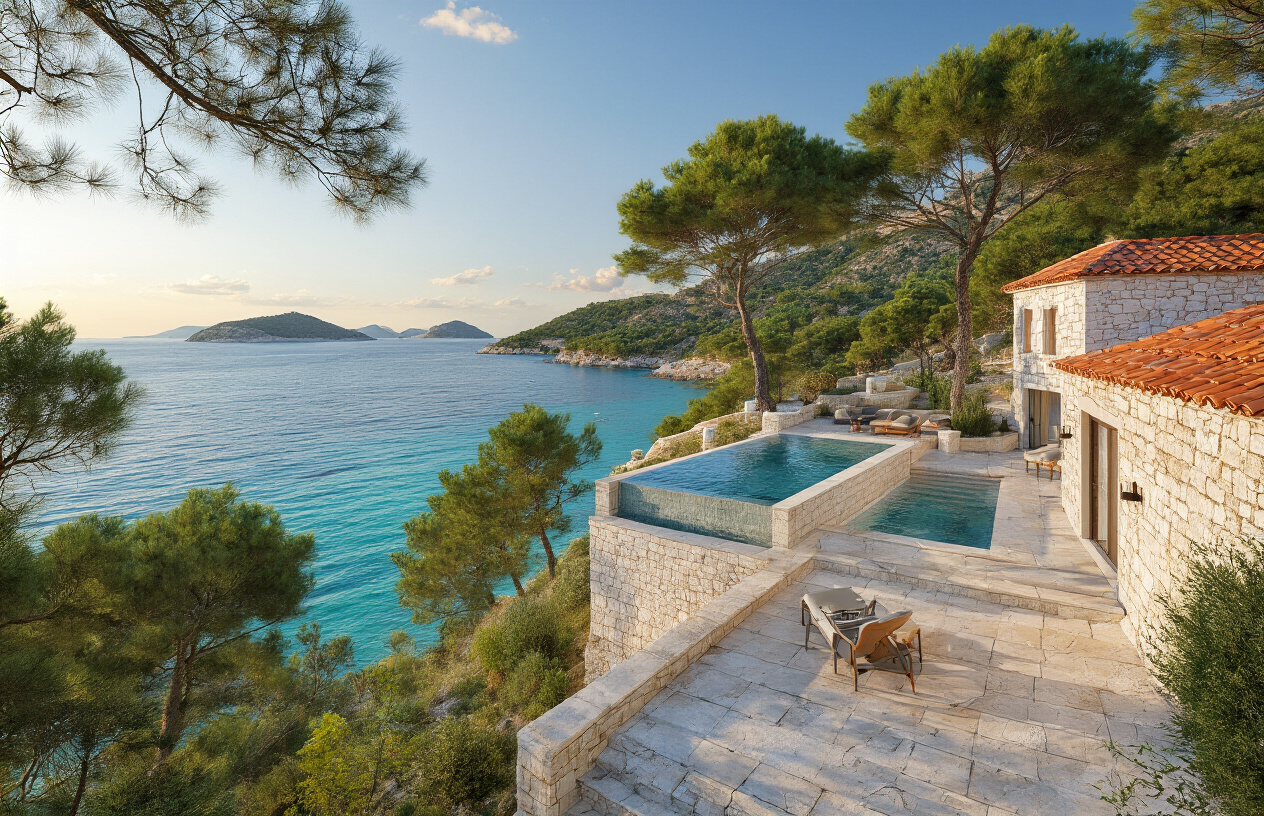
Croatia's stunning coastline, favorable legal framework, and growing co-ownership market make it an exceptional destination for your second home investment. Through co-ownership, you can access prime waterfront villas and historic properties across Istria, Dalmatia, and the islands for a fraction of traditional ownership costs. With professional management handling everything from legal compliance to property maintenance, you get to enjoy Croatia's crystal-clear waters and rich cultural heritage without the typical hassles of international property ownership.
The co-ownership model transforms what was once an exclusive market into an accessible opportunity. Whether you're drawn to Dubrovnik's medieval charm, Split's vibrant atmosphere, or the secluded beauty of Hvar, sharing ownership costs and responsibilities makes luxury Croatian properties within reach. With transparent legal agreements, fair scheduling systems, and clear exit strategies, co-ownership offers the security of real estate investment combined with the flexibility of modern vacation living. Your Croatian holiday home awaits – and it's more attainable than you might think.