


Sardinia Real Estate: A 2026 Co-Ownership Buyer's Guide
You've found the island. Now you want a piece of it.
Sardinia's property market is pulling in serious attention from foreign buyers — foreign demand jumped 64.5% between 2019 and 2023, and prices still sit well below what you'd pay in Milan or Rome. If you're an international buyer looking to buy property in Sardinia in 2026, the opportunity is real. So are the complications.
This guide is written for you — the non-Italian buyer who wants to own a slice of Sardinia italy real estate without getting blindsided by legal traps, surprise costs, or ownership structures that don't hold up. You'll get a clear look at who can legally buy, what the buying process actually looks like step by step, and why co-ownership sardinia is quickly becoming the smartest entry point for foreign investors who want access without the full financial exposure of solo ownership.
No fluff. Just what you need to make a confident, legally sound decision.
Who Can Legally Buy Property in Sardinia in 2026

EU vs. Non-EU Buyer Rights and Restrictions
Your nationality is the first thing that determines whether you can legally buy Sardinia real estate. The rules are straightforward:
| Buyer Category | Ownership Rights |
|---|---|
| EU, EEA, Swiss citizens | Same rights as Italian nationals — no restrictions |
| Non-EU citizens (reciprocity countries) | Can purchase freely |
| Non-EU citizens (no reciprocity) | Must hold a valid Italian residence permit |
EU citizens face zero barriers when purchasing sardinia property for sale. Non-EU buyers, however, must clear an additional legal hurdle before any transaction can proceed.
Reciprocity Agreements and Residence Permit Workarounds
If you're a non-EU citizen looking to buy property in Sardinia, your country must have a reciprocity agreement with Italy — meaning Italians can also buy property in your country. This rule is enforced at the national level and applies uniformly across the island.
If your country lacks such an agreement, you have a lesser-known but fully legitimate workaround: holding a valid Italian residence permit. Notaries regularly accept this as a qualifying condition, making it a practical path for buyers from countries without reciprocity arrangements.
If neither option applies, your remaining alternatives include:
- Purchasing through an Italian-registered company (SRL)
- Acquiring a long-term surface right (diritto di superficie), which grants building ownership for a defined period
How Marriage to an Italian Citizen Affects Your Eligibility
Marriage to an Italian citizen does not automatically grant you the right to buy Sardinia homes for sale if you personally fail to meet the reciprocity or residency requirements. Your eligibility is assessed individually, not transferred through marriage.
If you purchase property jointly with your Italian spouse, your share of ownership still requires you to meet the qualifying criteria. In practice, some buyers structure the deed solely in the Italian spouse's name to avoid complications — but you should clarify this arrangement with your notary in advance, as divorce would then subject that property to Italian matrimonial property rules (comunione legale or separazione dei beni).
Restricted and Protected Zones Every Buyer Must Know
There are no foreigner-exclusive restricted zones in Sardinia. However, certain areas impose severe constraints on everyone, regardless of nationality:
- Coastal zones: Sardinia's Regional Landscape Plan (PPR) prohibits new construction within 2 kilometers of the shoreline in most areas
- Heritage-listed areas: Subject to strict renovation controls under the national Cultural Heritage Code
- Natura 2000 habitats and hydrogeological risk zones: Development is heavily limited or prohibited
Before committing to any sardinia real estate purchase, request a Certificato di Destinazione Urbanistica (CDU) from the local municipality and verify the property against the PPR maps.
Sardinia Property Market Overview for 2026
Current Price Trends and Average Cost Per Square Meter
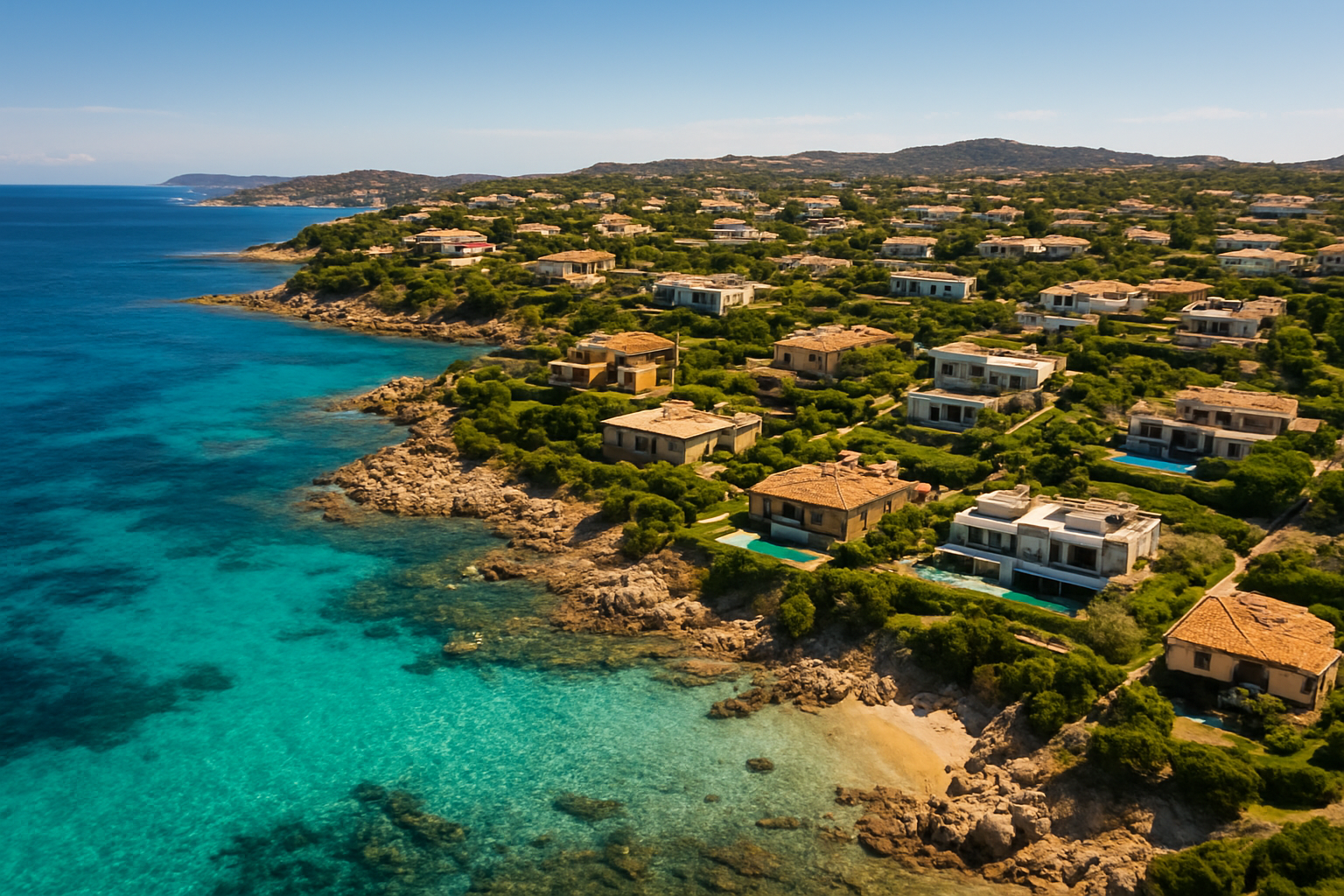
As of July 2026, the average asking price for Sardinia real estate sits at approximately €2,493 per square meter, reflecting a 3.14% increase compared to July 2025. Rental prices average €13.73/m², up 1.03% year-on-year.
It's worth noting that portal data can vary. Idealista reported a lower regional average of around €1,720/m² in May 2026, while Immobiliare.it showed ~€2,480/m² — the gap exists because listing mixes differ, with the latter skewing toward coastal and advertised stock. Most properties sell at 93–95% of asking price, so expect room to negotiate.
Regional Price Differences: Coastal vs. Inland Properties
Where you buy in Sardinia matters enormously. Here's how prices vary across provinces:
| Province | Average Price/m² (July 2026) |
|---|---|
| Gallura / Nord-Est Sardegna | €3,783 |
| Cagliari, Olbia, Alghero (coastal) | €2,000–€3,000+ |
| Inland villages / Medio Campidano | €793 |
Coastal and city properties in Cagliari, Olbia, and Alghero see faster sales (90–150 days on market), while inland homes can sit unsold for 240–360+ days. If resale liquidity matters to you, coastal proximity is non-negotiable.
Why Foreign Demand Has Surged Since 2019
Several structural factors have driven Sardinia property for sale into the international spotlight:
- Limited legal coastal supply — strict planning rules under the Piano Paesaggistico Regionale cap new beachfront development
- Record tourism — Sardinia recorded over 20 million overnight stays and 5 million arrivals in 2025
- Remote work lifestyle buying — buyers are increasingly choosing Sardinia for year-round living, not just summer visits
- Competitive Mediterranean pricing — compared to Côte d'Azur or Balearic Islands, Sardinia homes for sale still offer relative value
These combined forces keep demand outpacing supply in premium coastal submarkets like Costa Smeralda, Villasimius, Pula, and Chia.
How Sardinia Compares to Other Italian Real Estate Markets
Sardinia sits between two extremes in the Italian market. It's more affordable than Rome or Milan but more volatile than ordinary southern Italian markets. Unlike Sicily, Sardinia's coastal supply is more legally constrained, supporting stronger price floors in beachfront areas.
The 3–5 year outlook projects 10–20% nominal price growth by 2030 in the best coastal and city locations — making it one of Italy's more compelling buy-property markets for internationally minded buyers.
Safest Legal Ownership Structures for Foreign Buyers
A. Full Ownership vs. Surface Rights and Long-Term Leases
When buying property in Sardinia, your first structural decision is how you hold title. Full ownership (piena proprietà) means you own both the building and the land outright — the cleanest and most straightforward path for most foreign buyers. Surface rights (diritto di superficie) and long-term leases offer alternatives but come with time limits and restrictions that can complicate resale and financing.
For most buyers purchasing Sardinia homes for sale as a personal residence or holiday property, full ownership remains the safest and most legally transparent option.
B. Buying Through an Italian SRL Company
Some buyers consider purchasing Sardinia real estate through a corporate structure. An Italian SRL (Società a Responsabilità Limitata) can make sense in specific scenarios:
- Rental portfolios or commercial use — managing income, costs, and liability within a company structure
- Multi-property investment strategies — where centralised accounting and asset separation is beneficial
- Cross-border succession planning — offering more flexibility across jurisdictions than direct personal ownership
However, for a single holiday home or lifestyle purchase, corporate ownership typically increases your tax burden and adds ongoing administrative obligations. Corporate buyers do not benefit from the reduced registration taxes available to individual buyers, and Italian authorities will scrutinise where the company is effectively managed.
C. Grey-Area Arrangements That Put Foreign Buyers at Risk
With this in mind, it is critical to understand what to avoid. Some arrangements marketed informally to foreign buyers include nominee ownership, undeclared agreements, or verbal understandings about usage rights. These carry serious legal exposure:
- They may not be enforceable under Italian law
- They can expose you to fraud, double-selling, or loss of investment
- Italian notarial and registration requirements exist precisely to protect you — bypassing them removes that protection entirely
Never proceed without a formal deed registered through an Italian Notaio.
D. How to Separate Building Ownership from Land Ownership Legally
Italian law does permit the legal separation of building ownership from land ownership through surface rights (diritto di superficie). This must be formally documented and registered. If you are exploring this route — for example, within a co-ownership structure for Sardinia property — ensure your Italian lawyer drafts the agreement in full compliance with notarial requirements. Informal or undocumented separations of this kind fall squarely into the grey-area risk category described above.
Step-by-Step Property Buying Process in Sardinia

A. Obtaining Your Codice Fiscale Before Anything Else
Your Codice Fiscale is Italy's tax identification number, and you cannot buy Sardinia real estate without one. Get it first — before you even start seriously browsing sardinia homes for sale. You can apply at any Italian consulate in your home country, or at a local tax office (Agenzia delle Entrate) once you're in Sardinia. It takes minutes and costs nothing.
B. Finding Trusted Real Estate Agents and Legal Professionals
Cutting corners here is the single biggest mistake foreign buyers make.
- Real estate agent (agente immobiliare): Only work with agents registered with the local Chamber of Commerce. Ask for their registration number upfront.
- Independent lawyer (avvocato): Hire one who works exclusively for you — not the seller, not the agency.
- Notary (notaio): They're legally neutral, so they won't protect your interests the way your own lawyer will.
If you're exploring co-ownership Sardinia platforms, confirm they have verified legal partners already embedded in their process.
C. Making a Reservation Offer (Proposta di Acquisto)
Once you find the right sardinia property for sale, you'll submit a written reservation offer with a small deposit (typically €5,000–€10,000). This locks the property while due diligence runs. If the seller backs out, you get your money back. If you walk away without legal grounds, you lose it — so have your lawyer review everything before you sign.
D. Signing the Preliminary Contract (Compromesso) and Paying Your Deposit
The Compromesso is the real commitment. Here's what you need to know:
| Detail | Typical Terms |
|---|---|
| Deposit amount | 10–30% of purchase price |
| Legally binding | Yes, for both parties |
| Seller withdrawal penalty | Returns double your deposit |
| Buyer withdrawal penalty | You forfeit your deposit |
Your lawyer must verify the property title, check for mortgages or liens, and confirm planning permissions before you sign this document.
E. Completing the Final Deed (Rogito) Before a Notary
The Rogito is the official transfer of ownership, signed in front of a notary. You'll pay the remaining balance, all taxes, and notary fees at this stage. The notary registers the deed with the Land Registry, and you walk away as the legal owner of your sardinia italy real estate.
Essential Due Diligence to Protect Your Investment

A. Verifying Seller Legitimacy and Clean Title Ownership
Before you commit a single euro to Sardinia real estate, confirming who actually owns the property is non-negotiable. The Conservatoria dei Registri Immobiliari (Public Real Estate Registers) holds all ownership records and encumbrances. Your notary (notaio) is legally responsible for searching these records and guaranteeing you receive a clean title — one free of mortgages, liens, or unresolved disputes. Never skip this step, regardless of how trustworthy a seller appears.
B. Confirming Land Boundaries with a Licensed Geometra
Now that ownership is verified, your next priority is confirming exactly what you're buying. A licensed geometra (surveyor) will cross-check the physical property against its records in the Catasto (Italian Land Registry). This comparison exposes:
- Unauthorised renovations or extensions not recorded in the cadastral files
- Boundary discrepancies that could lead to neighbour disputes
- Mismatches between the actual floor plan and the registered layout
Under D.P.R. 380/2001, the seller is legally required to resolve any cadastral discrepancies before signing the final deed. If unresolved issues surface during your geometra's inspection, you have full legal grounds to pause the transaction until they are corrected.
C. Checking Planning Permissions and Building Permit Compliance
When you buy property in Sardinia, every structure on the land must have the correct permits on file. Your geometra will liaise directly with the Municipal Building Office to verify:
- That all building permits were properly issued and closed
- That the Certificato di Agibilità (Certificate of Habitability) exists, confirming compliance with health, safety, and building codes
- That the property falls within the correct zoning classification
Properties in protected landscapes or heritage zones require approvals from specialised authorities, which can extend your due diligence timeline to several months. Budget time accordingly when searching Sardinia homes for sale in coastal or rural areas.
D. Identifying Hidden Encumbrances, Liens, and Agricultural Restrictions
With planning permissions confirmed, the final layer of due diligence involves legal checks that go beyond the title deed. Your real estate lawyer and notary should investigate:
| Risk Type | What to Look For |
|---|---|
| Easements & Rights of Way | Third-party access rights crossing your land |
| Agricultural Restrictions | Land classified as agricultural may limit construction |
| Outstanding Liens | Unpaid debts secured against the property |
These encumbrances are not always visible in a standard title search, making specialist legal review essential before you finalise any Sardinia property for sale purchase.
Common Scams and Legal Pitfalls Targeting Foreign Buyers
A. Coastal and Landscape Restriction Traps to Avoid
Sardinia's coastline and interior landscapes are heavily protected under Italian environmental law. If you're looking at Sardinia real estate for sale near the coast, you must verify environmental and landscape constraints before signing anything. Properties within coastal buffers face stricter regulations that can prohibit new construction, limit renovations entirely, or require special permits that are difficult to obtain. Many sellers and agents won't volunteer this information upfront — which means your due diligence must catch it first.
B. Unauthorized Renovations and Demolition Order Risks
One of the most expensive traps targeting foreign buyers of Sardinia property for sale involves unpermitted construction. Italy has a long history of unauthorized building work, and many sellers have never legalized modifications made years or even decades ago.
Here's what that can mean for you practically:
- A veranda, extension, or converted outbuilding built without permits can result in fines exceeding €35,000
- Demolition orders for non-legalizable structures can add another €20,000 or more in costs
- Urban planning checks must confirm that every modification was officially permitted and documented
- The notary will not automatically flag these issues — only an independent technical and legal review will
If cadastral records show 80 square meters but the property is physically 120, that discrepancy signals illegal construction that transfers directly to you as the new owner.
C. Inheritance Complications and Multiple-Heir Disputes
When you buy property in Sardinia that was inherited or jointly owned, title risk multiplies. Properties sold through family arrangements can involve missing heir consents, invalid powers of attorney, or unresolved succession disputes. You need to reconstruct the full chain of ownership — not just review the most recent deed — to confirm the seller has unencumbered authority to sell.
D. Adverse Possession Claims and Emphyteusis Surprises
Rural Sardinia property for sale often carries ancient legal burdens that don't appear in standard listings. These include:
| Legal Burden | What It Means for You |
|---|---|
| Easements and rights of way | Third parties may have legal access across your land |
| Water rights | Historic water usage rights may limit your control |
| Emphyteusis | Long-term land tenure arrangements affecting ownership rights |
| Adverse possession claims | Third parties asserting rights through prolonged occupation |
With this in mind, the next section addresses the full cost breakdown so you can budget for Sardinia homes for sale without unexpected financial shocks at the closing table.
Full Cost Breakdown for Buying Property in Sardinia
A. Purchase Taxes for Second Homes vs. Primary Residence Buyers
Your tax bill depends heavily on how you classify the property.
| Buyer Type | Registration Tax | VAT (if buying from developer) |
|---|---|---|
| Primary residence (resident in Italy) | 2% of cadastral value | 4% |
| Second home / non-resident | 9% of cadastral value | 10% |
| Luxury property (any buyer) | 9% | 22% |
If you're buying Sardinia real estate as a holiday home—which most foreign buyers do—expect to pay 9% registration tax. The cadastral value is typically well below market price, so the actual tax hit is smaller than it sounds, but you still need to factor it in from day one.
B. Notary Fees, Agency Commissions, and Registration Costs
These are non-negotiable line items in every Sardinia property for sale transaction.
- Notary fees: 1–2.5% of the purchase price (higher percentage on lower-value properties)
- Agency commission: Typically 3–4% from the buyer and 3–4% from the seller—yes, you both pay
- Land Registry and Mortgage Registry fees: Fixed costs around €200–€600 combined
- Translation and sworn interpreter fees: €300–€800 if you don't speak Italian
Budget roughly 10–12% on top of the purchase price to cover all acquisition costs comfortably.
C. Hidden Fees That Catch Foreign Buyers Off Guard
When you buy property in Sardinia, these surprises show up after you've already committed:
- Urban planning compliance check: If the property has unauthorized additions, you either regularize them or demolish them—at your cost
- Preliminary contract deposit (caparra confirmatoria): Usually 10–20% of the price, lost entirely if you pull out
- Annual IMU tax: A municipal property tax for non-primary-residence owners, calculated on cadastral value
- Condominium arrears: Previous owners' unpaid fees become your liability after purchase
- Currency conversion losses: Paying in euros from a non-euro account adds 1–3% in exchange costs
D. How to Budget Accurately With a Contingency Strategy
A clean budget for buying Sardinia homes for sale looks like this:
- Agreed purchase price — your baseline
- Add 12% for all standard acquisition costs
- Add 5% as a contingency buffer for compliance issues, repairs, or currency shifts
- Separate your running costs — utilities, property management, IMU, insurance
Never stretch to your absolute maximum purchase price. Keeping a 15–17% overhead buffer above the listed price protects you when unexpected costs appear.
Why Co-Ownership Is the Smartest Way to Own Property in Sardinia

Lower Entry Cost, Real Property Ownership
Sardinia real estate has long attracted buyers who want something genuinely special — but full ownership puts most of it out of reach. Co-ownership changes that equation completely. You get a legally deeded share of a real property, not a timeshare or a points system, at a fraction of the solo purchase price. Your name is on the title. Your asset appreciates. Your equity is real.
No Stress, No Guesswork — Professional Management Included
Owning property abroad sounds exciting until you're chasing down a plumber from another country. With co-ownership in Sardinia, professional management handles maintenance, rentals, scheduling, and local compliance on your behalf. You show up, enjoy your time, and leave without a to-do list waiting for you.
A Smarter Entry Point Into a Market With Real Appreciation Potential
Sardinia property for sale — especially along the Costa Smeralda and the southwest coast — has seen consistent demand from European and international buyers. When you co-own, you're not sitting on the sidelines watching prices climb. You're already in the market, building equity in one of Italy's most sought-after destinations, with a manageable buy-in that makes the decision far easier to act on today. Listings like Palau Piccolo and Giardino Palau, both offered through MYNE on Sardinia's northeast coast near Costa Smeralda, show what that buy-in actually looks like — real, deeded shares starting from €119,000.
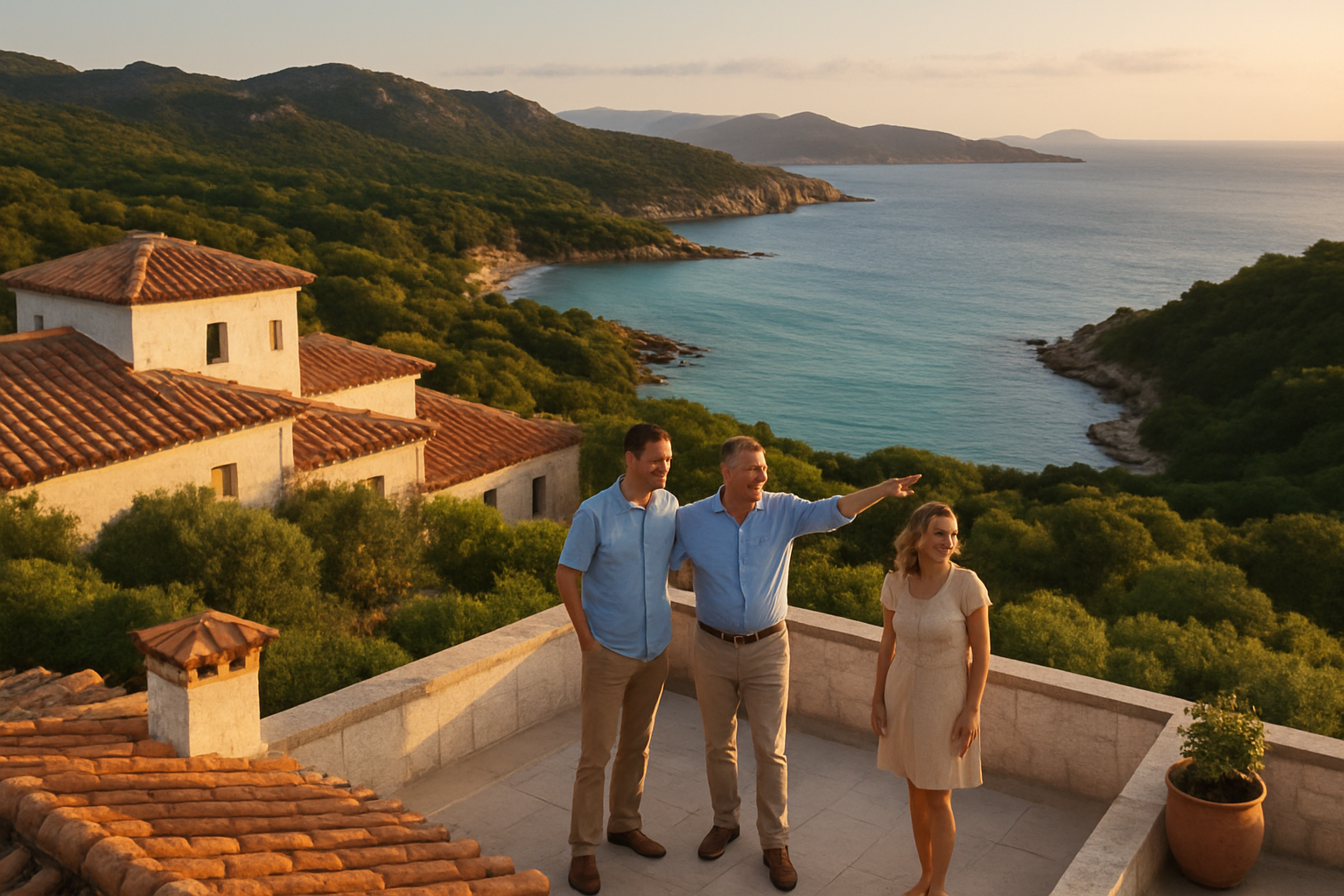
Buying property in Sardinia as a foreign co-owner in 2026 is entirely achievable, but it demands careful preparation at every stage. You need to confirm your legal eligibility, secure your codice fiscale, choose the right ownership structure, and work through a step-by-step process that includes a formal offer, a preliminary contract, and a final deed signed before a notary. Along the way, you must budget for closing costs that typically reach 10% to 15% of the purchase price, watch for common pitfalls like unauthorized renovations and coastal planning restrictions, and stay alert to grey-area arrangements that can expose you to serious legal and financial consequences.
The single most important decision you will make throughout this process is who you choose to guide you. Your notary handles the legal formality of the transfer but remains impartial, so hiring an independent attorney who works solely in your interest is essential. Pair that with a licensed real estate agent, a qualified geometra for boundary checks, and reliable market data, and you give yourself the best possible chance of a secure, well-informed purchase. Sardinia's property market offers genuine value and a lifestyle that is hard to match, and with the right team around you, your co-ownership investment can be both legally sound and deeply rewarding.