

Thinking About Buying Into the Algarve Together? Here's What You Need to Know First
If you've been eyeing Algarve Portugal real estate but the price tags on standalone villas have been giving you pause, co-ownership might be exactly the entry point you've been looking for. It's a buying model that's picking up real momentum among international buyers in 2026 — and for good reason.
This guide is written for you if you're a foreign buyer — whether you're planning retirement, a lifestyle second home, or a shared investment — and you want to understand how co-ownership actually works before you sign anything.
Here's what we'll walk through together:
- How co-ownership structures work in Portugal — from condominium setups to common property arrangements, so you know what you're actually agreeing to
- What your budget realistically gets you across different Algarve locations, and which property types tend to suit shared ownership the best
- The legal and financial realities every co-owner needs to understand — including tax obligations, pre-emption rights, decision-making rules, and the due diligence steps that protect everyone involved
No fluff, no lifestyle fantasy — just the practical stuff that helps you buy smart.
Why Algarve Co-Ownership Attracts International Buyers in 2026

Key Lifestyle and Investment Appeals of the Algarve
The Algarve remains Portugal's most internationally established coastal property market in 2026, and the data backs this up clearly. In Quinta do Lago and Vale do Lobo, approximately 80% of buyers are international, with British, Irish, German, Belgian, and Dutch buyers leading demand. Vilamoura follows closely, with 75% of buyers coming from overseas, drawn by its marina infrastructure and golf courses.
If you're evaluating Algarve luxury real estate, you're entering a market where international demand is concentrated in the Vilamoura, Albufeira, and Lagos triangle — a zone with proven liquidity and sustained buyer interest year after year.
How Co-Ownership Makes Desirable Properties More Accessible
Premium Algarve property for sale in resort areas carries price tags that put sole ownership beyond many buyers' reach. Co-ownership directly addresses this by allowing you to share acquisition costs, ongoing taxes, maintenance fees, and management responsibilities with other buyers.
Here's what co-ownership unlocks for you in practical terms:
- Access to higher-tier properties in locations like Quinta do Lago or Vilamoura that would otherwise exceed your individual budget
- Reduced exposure to Portugal's property taxes, including IMI (annual municipal property tax) and potential AIMI liability
- Shared operational costs such as condominium fees, insurance, and utilities
- Flexibility to use a premium property for a portion of the year while costs remain proportionate to your share
It's worth noting that Portugal places no restrictions on foreign ownership — EU and non-EU buyers purchase Algarve real estate on the same legal terms as Portuguese nationals. However, each co-owner still needs their own NIF (Número de Identificação Fiscal) to complete any purchase transaction.
What Serious Buyers Prioritize Before Starting Their Search
Before you begin searching Algarve Portugal real estate listings, experienced buyers consistently focus on three practical foundations:
With these essentials in place, your search becomes far more efficient. The sections ahead will walk you through the specific structures, locations, and financial considerations that shape every successful co-ownership purchase in the Algarve.
Understanding the Algarve Property Market in 2026
Current Price Trends and What Averages Can Miss
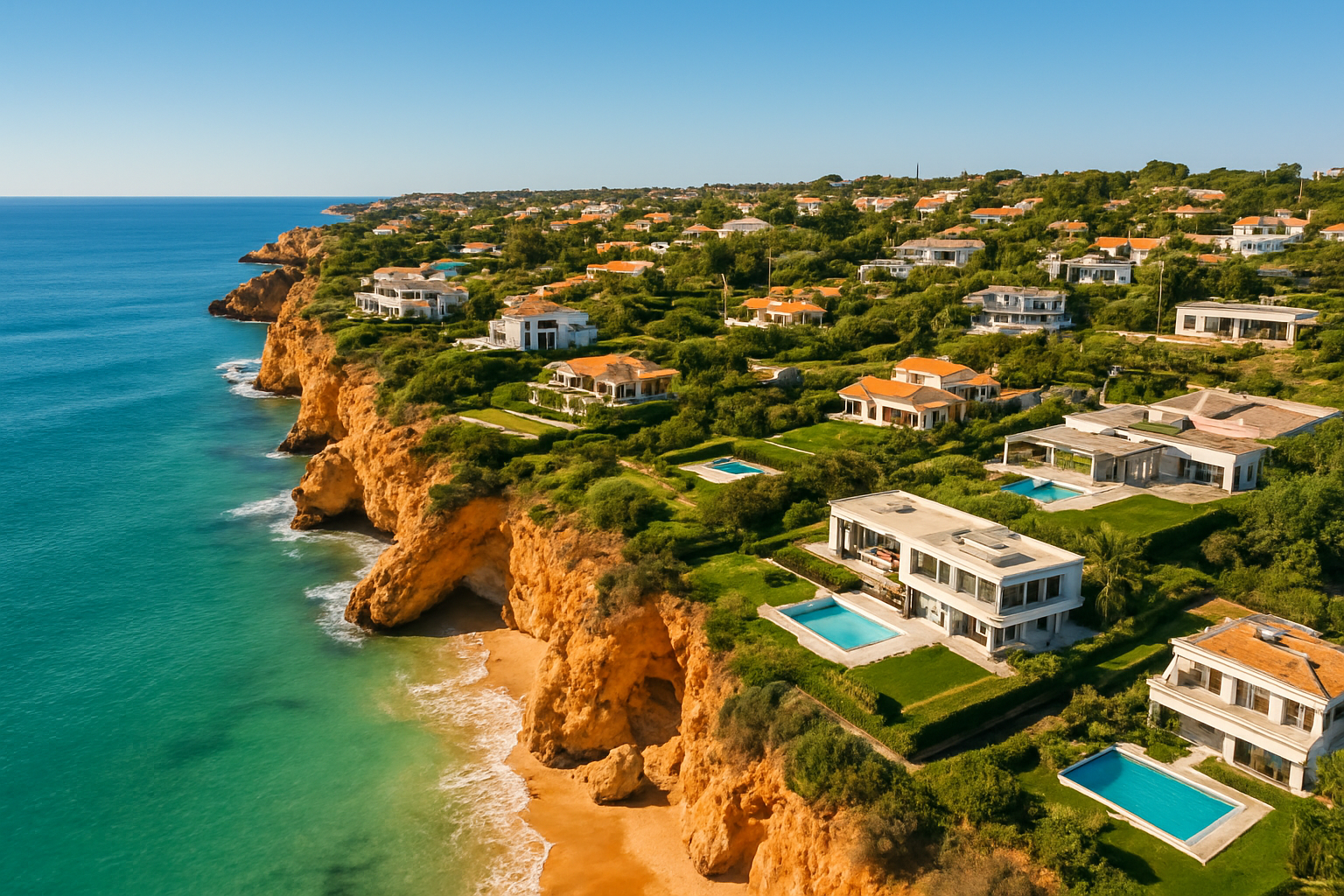
The Algarve sits at €3,352/m² as of Q1 2026, making it Portugal's second most expensive region after Greater Lisbon (€3,836/m²). Year-on-year, national prices rose 19.8%, with existing homes climbing even faster at 19.7%.
But here's what the headline figure won't tell you: that regional median masks enormous variation. If you're evaluating Algarve property for sale purely on averages, you're making decisions with incomplete data.
Two gaps deserve your attention immediately:
- Foreign vs. domestic buyers: Buyers with overseas tax residence paid a national median of €3,000/m² in Q1 2026 — roughly 30% above the €2,313/m² paid by Portuguese-resident buyers. In premium Algarve coastal markets, that gap widens further.
- New-build vs. existing stock: New homes command a significant premium over resale properties in most municipalities, driven by energy efficiency ratings, modern specifications, and buyer guarantees.
Four Critical Layers to Assess Before Trusting an Asking Price
Before you accept any asking price at face value in the Algarve real estate market, run it through these four filters:
With this in mind, your due diligence must go beyond listed price per square metre.
Why the Algarve Is a Collection of Micro-Markets, Not One Uniform Strip
The Algarve stretches across distinct zones — and your budget, lifestyle priorities, and co-ownership goals will perform very differently depending on which one you target.
Strong rental demand, world-class golf courses, and direct access to Faro International Airport (with flights across Europe and North America) define the Central Algarve's appeal. Exclusive coastal enclaves command the highest values and show the strongest capital appreciation. Further east and west, prices ease — but so does rental yield potential.
The Algarve luxury real estate segment continues to outpace broader national averages, particularly in prime coastal locations where supply remains tightly constrained. Knowing which micro-market aligns with your co-ownership strategy is where your analysis should begin.
Types of Co-Ownership Structures Available in Portugal

A. Condominium Ownership and Shared Common Areas
When exploring Algarve property for sale, condominium ownership is one of the most straightforward structures you'll encounter. Under this arrangement, you own a distinct private unit within a shared complex while jointly holding rights over common areas — pools, gardens, lobbies, and parking facilities — alongside other unit owners.
This structure is particularly prevalent across Algarve luxury real estate developments, where resort-style amenities make shared responsibility both practical and cost-effective. Your financial obligations extend beyond your unit: you contribute to communal maintenance costs proportional to your ownership share, and decisions affecting shared spaces are made collectively through a voting system where your vote corresponds to your percentage stake.
B. Common Property Where All Co-Owners Hold Undivided Interests
Common property ownership — known in Portuguese as comunhão — works quite differently from condominium structures. Here, you and your co-owners each hold an undivided interest in the entire property rather than a specific unit or demarcated section.
Key characteristics of this structure include:
- Equal access rights: Every co-owner has the legal right to use the whole property, not just a designated portion
- Proportional cost-sharing: Expenses such as IMI (Municipal Property Tax), maintenance, and insurance are divided according to each owner's quota
- Pre-emption rights: If you decide to sell your share, existing co-owners must be offered the first opportunity to purchase it before any third party
- Decision-making thresholds: Ordinary management decisions require majority consent, while significant changes — such as major renovations — typically demand unanimous agreement
This structure commonly arises through joint purchases between friends or investment groups pooling resources to access Portugal real estate for sale that might be unattainable individually.
C. Timeshare Arrangements for Resort and Holiday Properties
With this in mind, timeshare arrangements offer a third distinct path, particularly suited to Algarve real estate in resort and holiday settings. Rather than owning an ongoing undivided interest, you purchase the right to use a property during specific, designated periods each year.
Timeshares are especially popular across resort condominiums in the Algarve, where multiple investors share both the property and its costs while each enjoying exclusive access during their allocated windows.
Rights and Responsibilities Every Co-Owner Must Understand

How Decision-Making and Voting Work Among Co-Owners
Under the Portuguese Civil Code, decisions about your Algarve property are made through a proportional voting system — your vote carries weight equal to your ownership share. For routine administrative acts, a majority representing at least half the total property value is typically sufficient. However, for significant decisions — major renovations, selling the entire property, or structural changes — unanimous consent from all co-owners is usually required.
This means that before committing to any Algarve real estate purchase, you should clearly establish with your co-owners:
- What qualifies as a routine versus significant decision
- How voting deadlocks will be resolved
- Whether a management representative will be appointed to handle day-to-day matters
A well-drafted co-ownership agreement (acordo de compropriedade) should document these procedures explicitly, reducing the risk of costly disputes down the line.
Sharing Maintenance Costs and Managing Repairs Fairly
With this in mind, your financial obligations as a co-owner extend well beyond the purchase price. Every co-owner is legally obliged to contribute to ongoing property expenses — maintenance, repairs, Municipal Property Tax (IMI), and insurance — proportional to their ownership share unless a different arrangement is formally agreed in writing.
Routine upkeep is straightforward to manage, but unexpected repairs can expose fault lines between co-owners if responsibilities aren't pre-defined. Your co-ownership agreement should address:
- How a maintenance reserve fund will be established and funded
- The process for approving unplanned repair expenditure
- What happens if one co-owner refuses or cannot contribute their share
Treating this as a business arrangement rather than a personal one protects all parties and keeps your Portugal real estate investment performing as intended.
Transferring Ownership Shares and Pre-Emption Rights
Previously, many buyers in the Algarve property market underestimated how legally involved transferring a co-ownership share can be. Under Portuguese law, your co-owners hold pre-emption rights (direito de preferência) — meaning if you wish to sell your share, you must first offer it to the existing co-owners under the same terms available to any third-party buyer.
This process requires formal notification and must follow stipulated legal procedures to ensure transparency and fairness. Failure to honour pre-emption rights can render a sale legally challengeable.
Your co-ownership agreement should also include:
- Agreed property valuation methods
- Buy-out mechanisms and timelines
- Exit clauses that protect all parties equally
Where to Buy in the Algarve Based on Your Buyer Profile

Golden Triangle and Prime Coastal Pockets for Luxury Buyers
If your priority is algarve luxury real estate with resort-level amenities, Vilamoura — part of the Loulé municipality — is your benchmark, averaging €4,500/m² and offering a planned marina, golf, and a family-resort atmosphere. Lagos (€4,250/m²) delivers premium walkable lifestyle with a strong year-round expat community, though summer over-tourism and sharply rising prices are real trade-offs to weigh.
Central Algarve for Families, Retirees and Amenity-Focused Owners
With this in mind, if your co-ownership is driven by year-round usability and access to services, the central Algarve offers practical advantages. Faro (€2,780/m²) stands out for city living with direct hospital and airport access — ideal for retirees who don't want car dependency. Portimão (€2,650/m²) provides a mid-priced coastal entry point with a larger town infrastructure, though the central area is less attractive than its peripheral suburbs.
Western Algarve for Lifestyle and Beach-Focused Buyers
Now that we've covered the central core, moving west reveals a distinct character. Lagos anchors the western Algarve as the go-to for algarve property for sale that combines beach access with a genuine community. Smaller coastal villages like Burgau and Salema (€3,200–€4,800/m²) offer fishing-village charm, though services are seasonal and shopping is limited — important considerations for a shared-ownership arrangement.
Eastern Algarve for Authenticity and a Calmer Pace
Previously the quieter alternative, Tavira (€2,900/m²) continues to attract buyers seeking historic-town living with far less summer chaos than the central coast. It's particularly well-suited to co-owners who want an authentic algarve real estate experience without peak-season overcrowding, though its smaller services scene and greater distance from Faro airport require factoring into your shared-use planning.
Inland Algarve for Value, Space and Renovation Opportunities
For portugal real estate for sale at genuine value, inland towns like Loulé (€2,400/m²) and São Brás de Alportel remain the strongest options, with per-m² pricing well below the coast. The trade-off is clear: you'll need a car, and the expat community is noticeably smaller — factors that co-owners should align on before committing.
What Your Budget Realistically Buys as a Co-Ownership Buyer

Budget Ranges and What Each Tier Typically Offers
Co-ownership in the Algarve is structured around 1/8 deeded shares, meaning your entry cost is roughly one-eighth of the full property value. On platforms like Kocomo, shares start from €154,000, with a typical share priced around €249,000. Here is what each tier realistically delivers:
Your budget tier directly shapes not just the property size but its location, finish quality, and the strength of management infrastructure behind it. Beira Vilamoura, a 2-bed share in Loulé managed by MYNE, sits right at that entry level from €179,000.
How Location Shifts Value More Than Square Metres Alone
With this in mind, understanding where your budget lands on the Algarve map matters as much as the property's size. The Algarve runs 200 kilometres of Atlantic coastline, and price positioning varies significantly across it.
- Quinta do Lago and Vale do Lobo represent the premium tier — architectural-controlled villas, championship golf, and a long-established international buyer base. Your share price here reflects that exclusivity.
- Vilamoura offers Europe's largest small-boat marina, five golf courses, and deep resort infrastructure — a strong mid-to-premium market.
- Lagos and Carvoeiro give you access to dramatic coastal scenery at more accessible price points.
- Tavira and the eastern Algarve deliver an authentically Portuguese environment with lower pricing and less development pressure.
- The western Algarve around Aljezur and Costa Vicentina is nature-protected and surf-oriented — value-driven but with legal and planning restrictions worth checking carefully.
Your euro buys more square metres in Tavira than in Quinta do Lago, but the latter carries stronger resale demand and management maturity.
Matching Budget, Condition and Legal Clarity for the Best Outcome
Previously, I've outlined how location reshapes what your budget delivers. Now, the third variable is legal and structural clarity. When evaluating Algarve property for sale under a co-ownership model, prioritise listings where:
- Transparent pricing is clearly published per share
- Vetted management providers are already in place
- Resale support is built into the structure
Algarve luxury real estate through co-ownership rewards buyers who align budget, location choice, and legal confidence — not just the lowest entry price.
Algarve Property Types Suited to Co-Ownership Arrangements
Apartments for Low-Maintenance and Lock-Up-and-Leave Ownership
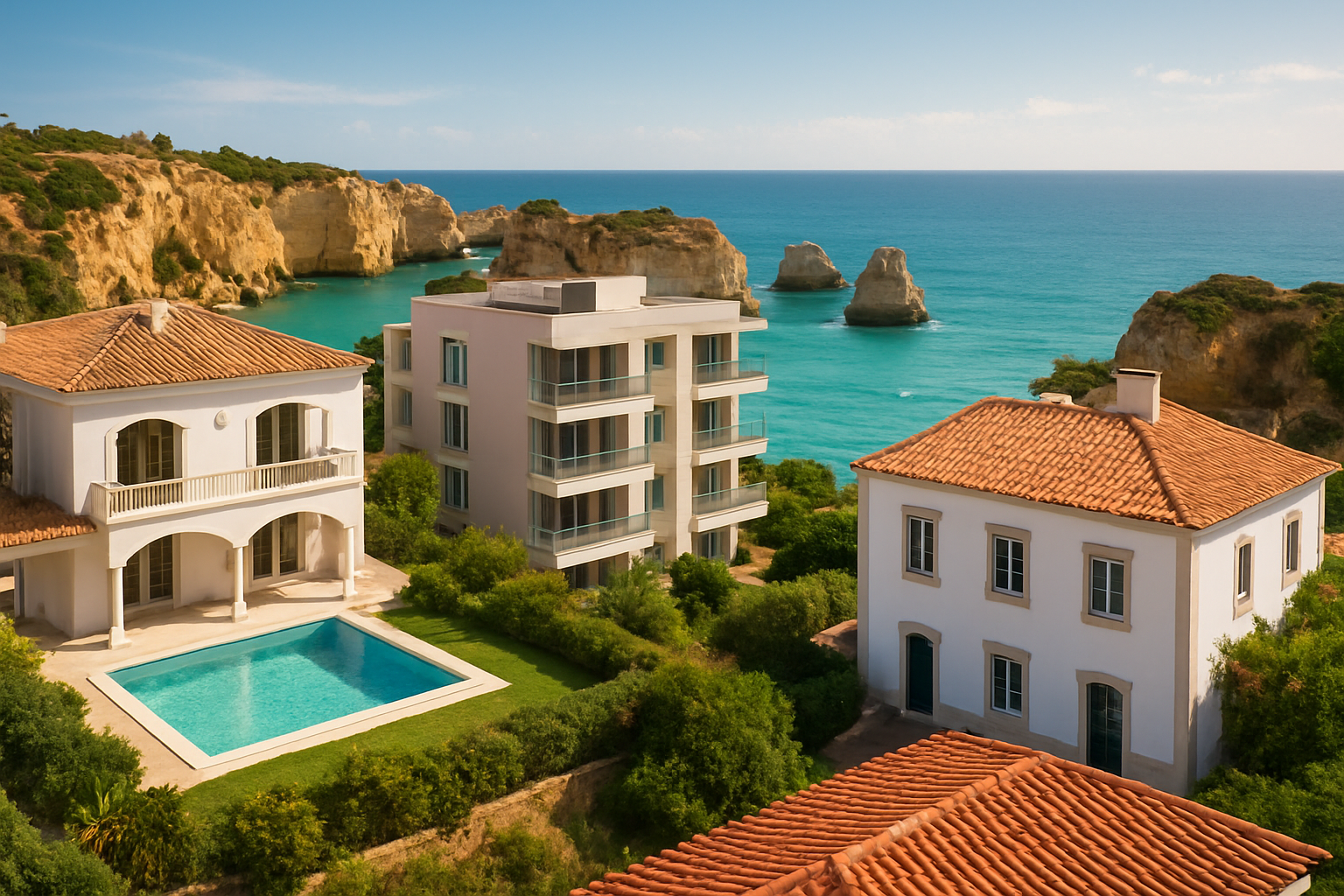
If your priority is simplicity, apartments are your most practical entry point into Algarve real estate. Whether you're buying near the Marina de Faro, the Albufeira strip, or closer to Vilamoura, apartments typically sit within managed complexes that handle exterior maintenance, security, and communal upkeep. For co-owners splitting usage across different nationalities and time zones, this structure removes the friction of coordinating repairs or landscaping between visits.
Villas for Privacy, Pools and Shared Lifestyle Use
Villas represent the most aspirational co-ownership format in the Algarve — and for good reason. Properties above Portimão, across the Quinta do Lago estate, or within Vale do Lobo offer the gardens, pools, and Atlantic views that define the region's luxury appeal. Villa Maresia, a 4-bed MYNE-managed villa in Albufeira, illustrates this at €399,000 for a 1/8 share. When you co-own a villa here, you're sharing not just the asset but a lifestyle — one that aligns well with structured usage schedules outlined in your co-ownership agreement. The key is ensuring your acordo de compropriedade addresses usage periods clearly, particularly for peak summer months when demand among all co-owners is highest.
Townhouses as a Practical Middle Ground for Co-Owners
Townhouses offer a compelling balance between the turnkey convenience of apartments and the space and privacy of villas. For co-owners who want more room than a flat provides — without the full maintenance burden of a standalone villa — townhouses in areas like Lagos's historic walled centre or the eastern Algarve around Tavira give you architectural character alongside manageable running costs. Shared ownership of a townhouse also tends to generate less disagreement, given the more predictable expense structure and clearer delineation of space.
Golf, Marina and Resort Properties with Built-In Lifestyle Structure
If you want the Algarve's full resort infrastructure working in your favour, co-owning within a golf estate or marina community is worth your serious consideration. Communities like Vilamoura — anchored by five championship courses and Europe's largest small-boat marina — or the architecturally controlled estates of Quinta do Lago come with pre-existing management frameworks, concierge services, and rental management programmes. This built-in structure makes co-ownership considerably more straightforward, as many of the operational decisions you'd otherwise need to agree on collectively are already handled by the resort infrastructure.
Step-by-Step Buying Process for Co-Owners in Portugal

Obtaining Your NIF and Opening a Portuguese Bank Account
Before you can pursue any Algarve real estate transaction, you need a Portuguese Tax Identification Number (Número de Identificação Fiscal, or NIF). This number is mandatory for all fiscal activities, including signing contracts, registering property, and setting up utilities. You can obtain it through a local tax office or by appointing a legal representative to act on your behalf. Once you have your NIF, opening a Portuguese bank account follows naturally — while not legally required, it makes handling ongoing costs like IMI tax and utility payments significantly more straightforward.
Making an Offer and Understanding the CPCV Promissory Contract
With your NIF and bank account in place, you're ready to make a formal offer through your agent. Once the seller accepts, the next binding step is signing the Contrato Promessa de Compra e Venda (CPCV) — a promissory contract that locks in the terms of the sale. At this stage, you'll typically pay a deposit ranging from 1% to 10% of the purchase price. Note that under a 2024 legislative change, sellers are no longer required to present the Licença de Utilização (Habitation License) at CPCV stage — but as a buyer, you should still insist on reviewing it to confirm the property's condition and legal compliance.
Legal Due Diligence Before Signing Any Binding Documents
This is a step you should never skip when buying Algarve property for sale. Engaging an independent advogado (qualified lawyer) protects your interests throughout the process. Your lawyer will:
- Verify the property is free from debts or legal encumbrances
- Review all contracts before you sign
- Check the Land Registry (Conservatória de Registo Predial)
- Confirm records with the Inland Revenue (Repartição de Finanças)
- Advise on the Caderneta Predial (land register) and energy certificate requirements
Completing the Final Deed and Registering the Property Correctly
With due diligence complete, you move to the Escritura Pública — the official deed of purchase and sale, signed before a notary. This is when you pay the remaining balance. The notary acts as a state intermediary, verifying all documentation before transfer of ownership is confirmed.
After signing, you must register the property in your name at both the Land Registry and the Tax Office. This final step is what formally secures your ownership and ensures your investment in Algarve real estate is properly protected under Portuguese law.
Financial Considerations Every Co-Owner Must Budget For

A. Property Transfer Tax, Stamp Duty and Acquisition Costs Beyond the Price
When budgeting for Algarve property for sale, the listed price is only part of what you'll pay. Here's what you need to factor in as a co-owner:
For properties under €1,000,000, budget 6–8% above the purchase price in acquisition costs. For Algarve luxury real estate above €1,000,000, that rises to approximately 10%, as IMT applies at a fixed 7.5% rate. As co-owners, these costs are typically split proportionally — confirm this arrangement in writing before signing anything.
B. Mortgage and Financing Options for Non-Resident Co-Owners
If you require a mortgage, additional costs apply beyond the standard acquisition fees. You'll need to budget for:
- Bank arrangement fees
- Property valuation costs
- Translation fees for documents
- Additional stamp duty of 0.6% on the mortgage amount
Portuguese lenders do offer mortgages to non-residents, but each co-owner's financial profile is assessed individually. Your share of the mortgage liability must be clearly defined in the co-ownership agreement.
C. Rental Income Tax Obligations and Co-Owner Responsibilities
If you plan to generate rental income from your Algarve real estate investment, you must first obtain a rental licence permit (AL licence). Each co-owner shares responsibility for tax compliance on income generated. Rental income earned in Portugal is subject to Portuguese tax, and you should seek specialist advice to understand how your share of income is declared and taxed, particularly as a non-resident.
D. Ongoing Ownership Costs Including Pool, Garden, Insurance and Management
With this in mind, don't overlook the recurring costs that follow purchase. For apartments and resort properties, monthly condominium fees of €30–€150 typically cover pool maintenance, gardens, common areas and lighting.
For villas, you'll arrange and pay for pool and garden maintenance separately — costs vary based on usage and property size.
Additional annual obligations include:
- IMI (Municipal Property Tax): 0.3%–0.8% of the registered fiscal value
- AIMI (Additional Property Tax): applies if your Portuguese property holdings exceed €600,000 in fiscal value
- Utility costs: water, electricity, gas, internet and TV subscriptions
Legal Nuances and Compliance Requirements for Co-Owners

How Portuguese Civil Code Governs Co-Ownership Arrangements
The Portuguese Civil Code forms the backbone of every co-ownership arrangement you'll enter into when purchasing Algarve real estate. It outlines the specific rights, responsibilities, and procedures that all co-owners must follow, creating a structured framework designed to promote clarity and cooperation.
Key Civil Code provisions you need to know include:
- Decision-making rules – Your vote is proportional to your ownership share, with majority voting as the standard for property management decisions
- Cost-sharing obligations – Maintenance and repair costs are divided according to ownership percentages
- Pre-emption rights – Under Article 1410, existing co-owners have the right to purchase a share before it can be sold to an outside party
- Division rights – Co-owners can legally request the division of common property if an agreement cannot be reached
These rules apply equally across all forms of co-ownership, whether you're buying into a condominium, a comunhão arrangement, or a timeshare structure in the Algarve property market.
Ensuring Foreigners Understand Their Rights Without Legal Restrictions
One of the most reassuring aspects of Portugal real estate for sale is that there are no legal restrictions for foreign nationals purchasing property. Whether you're buying in Lagos, Quinta do Lago, or anywhere across the Algarve, you have the same ownership rights as Portuguese citizens.
Foreigners can own:
- Residential properties under any joint ownership structure
- Commercial properties with full co-ownership rights
- Timeshare interests in resort condominiums
With this in mind, your priority should be engaging an experienced, English-speaking lawyer who understands Portuguese property law before committing to any Algarve luxury real estate purchase. This ensures you fully understand your obligations around tax compliance, ownership transfers, and co-owner voting rights from day one.
Resolving Disputes Through Mediation and Legal Mechanisms
Disputes between co-owners are not uncommon, especially where decision-making, maintenance costs, or usage scheduling create friction. Portuguese law provides a structured resolution pathway:
- Mediation first – A neutral third party helps co-owners reach a mutually acceptable solution
- Legal proceedings – If mediation fails, the Portuguese Civil Code provides specific mechanisms to resolve conflicts over usage rights, maintenance responsibilities, and decision-making
- Forced sale – As a last resort, a court can order the division or forced sale of the property, with proceeds distributed among co-owners according to their shares
Throughout any dispute process, the right of first refusal among co-owners remains protected under Portuguese law.
Strategies for Different Co-Ownership Buyer Profiles

A. What Investor Co-Owners Should Prioritize for Returns and Resale
If your primary goal is capital appreciation and liquidity, your co-ownership strategy in the Algarve should focus on a few key priorities:
- Location within central Algarve — areas like Lagos, Vilamoura, and Quinta do Lago consistently attract strong buyer demand, which directly supports your resale value.
- Transferable, deeded shares — ensure your 1/8 share is registered with the Portuguese Conservatória do Registo Predial, making it legally transferable and inheritable.
- Resale speed — structured co-ownership portfolios can complete resales in around a month or less, giving you far greater liquidity than a traditional full-property sale in the Algarve luxury real estate market.
- Proportional appreciation — your share appreciates in line with the underlying property, so selecting high-demand Algarve real estate for sale ensures your investment grows with the market.
B. How Retiree Co-Owners Can Maximize Comfort and Accessibility
With this in mind, if you're planning retirement use rather than pure investment, your priorities shift toward comfort, convenience, and reliable access.
- Choose professionally managed properties — your annual service charge covers IMI, AIMI, insurance, maintenance, utilities, and security, removing the day-to-day burden of ownership entirely.
- Prioritize airport proximity — Faro Airport (FAO) serves the Algarve directly, making your 45 days of annual personal use genuinely accessible without lengthy transfers.
- Select the right climate zone — the Algarve's 200 kilometres of coastline offers distinct sub-regions; eastern Algarve towns like Tavira offer a quieter, more relaxed pace suited to retirement living.
- Use the rotation calendar strategically — the fair-rotation calendar allows you to secure warmer shoulder-season weeks, maximizing comfort across your annual stays.
C. What Second-Home Co-Owners Need for Hassle-Free Shared Use
Now that we have covered investor and retiree priorities, second-home buyers focused on holiday use need a different checklist entirely.
Your goal is frictionless enjoyment — arriving to a property that is maintained, insured, and ready, without coordinating directly with other co-owners on logistics.
Due Diligence Checklist Before Committing to a Co-Owned Algarve Property

Legal Ownership, Land Registry and Habitation Licence Checks
Before committing to any Algarve property for sale, verify these three foundational documents:
- Caderneta Predial Urbana – Issued by the Tax Authority, this confirms the registered owner's name and NIF, the fiscal value (VPT), property typology, and whether IMI taxes are current. Ensure the seller's name matches their ID exactly.
- Certidão Permanente do Registo Predial – This live Land Registry certificate reveals the full ownership chain, plus any mortgages, liens, or encumbrances. Any existing mortgage must be discharged at or before the deed. Unpaid debts tied to the property can transfer to you under Portuguese law.
- Licença de Utilização – Confirms the property is legally authorised for residential use. If the licence is missing or only covers part of the property, unlicensed extensions or conversions were likely carried out illegally — and that risk passes to you if unresolved.
In a co-ownership context, additionally confirm that all registered co-owners are identified and fully aligned to sell. A single dissenting heir can lock a transaction for years.
Condominium Accounts, Rules and Reserve Fund Verification
With ownership title confirmed, your attention shifts to the building's financial health. Request a written letter from the administrador do condomínio certifying the seller has no outstanding condominium fees — this debt can legally pass to you as the new owner.
Go further and review:
- Recent assembly minutes to identify any planned major works or disputes
- Reserve fund balance to assess whether the building can absorb future repairs
- Condominium rules on short-term rentals — Portuguese law allows condominium assemblies to restrict or ban Alojamento Local (AL) lettings if at least 50% of owners agree. If you're buying Algarve real estate with rental income in mind, this check is non-negotiable.
Building Condition, Rental Restrictions and Renovation Feasibility
Now that you've reviewed the legal and financial layers, turn to the physical asset itself. Portuguese buyers rarely commission independent surveys, but as a foreign co-ownership buyer, you should consider engaging a qualified architect or structural engineer. For a few hundred euros, you get a professional assessment covering water ingress, structural cracks, roof condition, and foundation integrity — details that documentation alone won't surface.
Also verify:
- AL licence status — confirm whether the property holds or can obtain a short-term rental licence under the current municipality's rules
- PDM planning constraints — check the Municipal Master Plan for restrictions near protected zones before assuming renovation or extension is feasible
Common Mistakes Co-Ownership Buyers Make in the Algarve

A. Assuming Rental Income Without Verifying Licensing and Restrictions
If rental yield is part of your co-ownership case, verify the Alojamento Local (AL) licence status before you commit a single euro. Short-let rules now sit with individual municipalities, and restrictions vary significantly across Algarve parishes. An existing, transferable AL registration attached to a property can be genuinely valuable — its absence can quietly destroy your income projections. Never assume a property can be legally let short-term without checking the specific licence, the local authority's position, and whether a new registration is even available.
B. Ignoring Condominium Rules, Reserve Funds and Shared Obligations
Co-ownership in a condominium or resort development means inheriting shared obligations, not just shared square metres. Before signing anything, your lawyer should pull the full condominium accounts, check for outstanding arrears, and review the reserve fund balance. In Portugal, debts follow the property — unpaid condominium fees owed by a previous owner become your liability on completion. Review the condominium rules carefully too; restrictions on subletting, renovation works, or short-term rental use directly affect how you and your co-owners can use and monetise the asset.
C. Underestimating Villa Maintenance and True Annual Ownership Costs
Many co-ownership buyers in the Algarve property market focus on the purchase price and overlook what ownership actually costs year-on-year. Beyond your share of the mortgage or acquisition price, budget for IMI (annual property tax), condominium service charges, pool and garden maintenance, insurance, and property management fees if you are not locally based. For villas in particular, these costs accumulate quickly. A realistic annual cost model — shared proportionally between co-owners — should be agreed and documented before the purchase completes, not discovered after the first year's bills arrive.
D. Skipping Legal and Technical File Reviews Before Paying a Deposit
With this in mind, perhaps the most preventable mistake is paying a deposit before your independent lawyer has reviewed the full legal and technical file. In Portugal, the promissory contract (CPCV) is binding from signature — if you withdraw without contractual justification, your deposit is lost. Before that moment arrives, your lawyer must verify the land registry certificate, the caderneta predial, the habitation licence, urban planning compliance, and any co-ownership agreement already in place. For older Algarve properties, commission an independent structural survey. This step alone has saved buyers from absorbing a previous owner's undisclosed problems.

Co-ownership in the Algarve can open doors to properties and locations that might otherwise sit beyond reach on your own. But as this guide has covered, buying well as a co-owner means understanding far more than the asking price. From choosing the right ownership structure and knowing your rights under the Portuguese Civil Code, to budgeting for IMT, stamp duty, maintenance splits and ongoing management, every layer of the decision matters. The area you choose, the property type you buy, the legal clarity of the file and the co-ownership agreement you put in place will all shape whether the arrangement works smoothly or creates friction down the line.
The strongest co-ownership purchases happen when you and your co-owners align on use, responsibilities, decision-making and exit plans before you sign anything binding. Work with an independent lawyer, check every layer of the legal and technical file, and treat due diligence as non-negotiable rather than optional. Whether you are buying with a partner, family member or trusted friend, the right professional support makes the difference between an arrangement that runs well for years and one that creates problems you did not anticipate. If you are ready to move from research to a focused Algarve property search in Portugal, co-ownership platforms like MYNE can help you compare realistic opportunities and navigate the process with confidence.