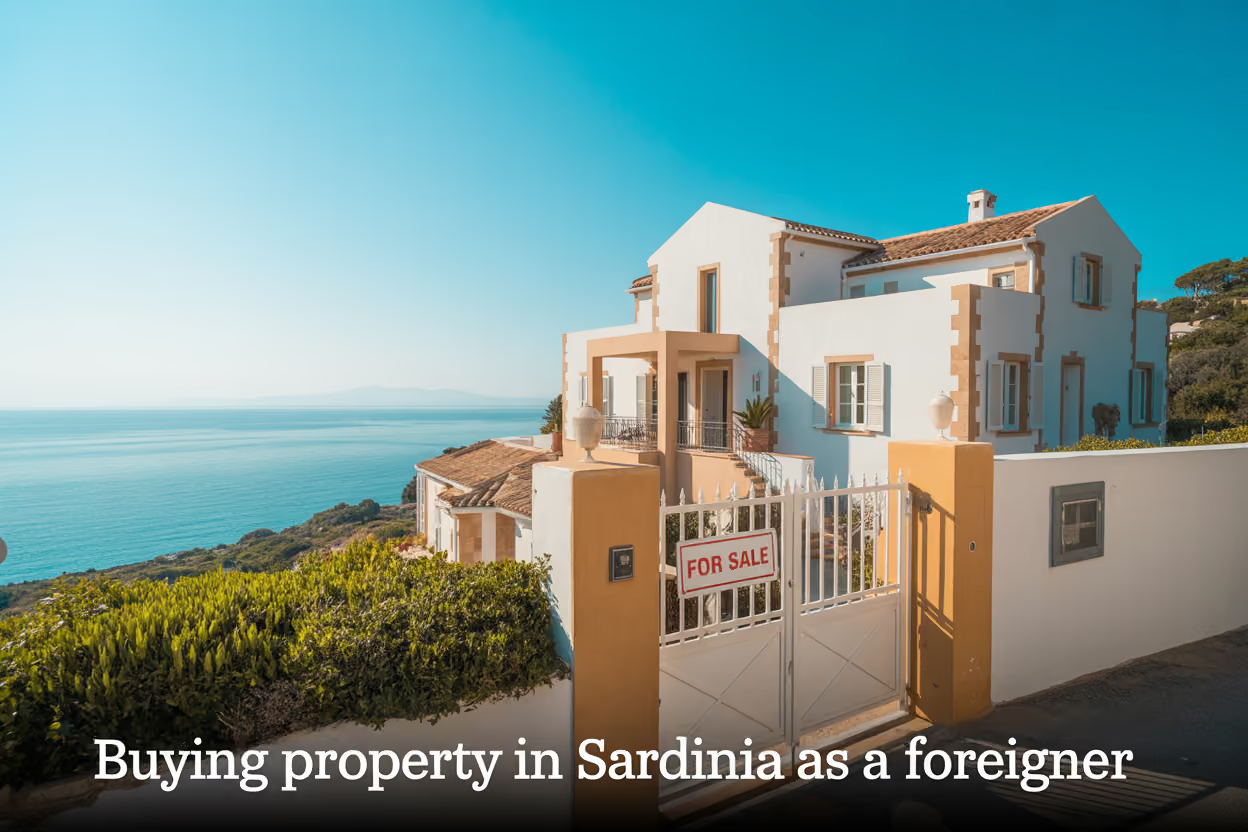
Can Foreigners Buy Property in Sardinia? Rules, Taxes and Costs in 2026
Yes, you can buy property in Sardinia as a foreigner — but the rules depend heavily on where you're from, what you want to do with the property, and how much of the process you get right before signing anything.
This guide is for non-Italian buyers — whether you're from the US, Germany, the UK, or anywhere else — who are seriously considering buying property in Sardinia and want straight answers about what's actually involved in 2026.
Here's what we'll walk you through:
- Who can legally buy — including the reciprocity rules that catch most non-EU buyers off guard, and the workarounds that actually hold up in practice
- What it's going to cost you — closing costs for foreign buyers typically run 10% to 15% on top of the purchase price, and there are hidden fees most buyers don't see coming
- Where you can and can't buy — Sardinia's coastal building restrictions under the Regional Landscape Plan affect what you can actually do with a property far more than any foreigner-specific ownership rule
Foreign demand for Sardinian real estate jumped 64.5% between 2019 and 2023. Prices are still well below Milan or Rome, averaging around €2,420 per square meter in mid-2025. The interest is real — but so are the mistakes. Let's make sure you don't make them.
Who Can Legally Buy Property in Sardinia as a Foreigner
EU, EEA, and Swiss Citizens Face No Restrictions
If you hold an EU, EEA, or Swiss passport, you can buy property in Sardinia under the same conditions as Italian nationals. No special permits, reciprocity checks, or residency requirements apply to you.
Non-EU Buyers Must Meet Reciprocity or Residency Requirements
For non-EU buyers, the eligibility rules around can foreigners buy property in Sardinia depend on your nationality. Your country must have a reciprocity agreement with Italy, meaning Italians can also buy property in your country. US citizens, for example, qualify under this arrangement and can purchase any property type in Sardinia without restrictions.
How a Valid Italian Residence Permit Opens the Door for Non-EU Buyers
If your country lacks a reciprocity agreement with Italy, a valid Italian residence permit serves as a recognised alternative. Notaries regularly accept this route, making it a practical workaround for otherwise ineligible buyers.
Why Buying Property Does Not Grant Immigration Rights or Residency
A common misconception among foreign buyers is that purchasing property grants residency or visa rights. It does not. You remain subject to standard Schengen rules — a 90-day limit within any 180-day period — regardless of what you own. Residency and property ownership are two entirely separate legal tracks you must pursue independently.
Where Foreigners Can and Cannot Buy in Sardinia
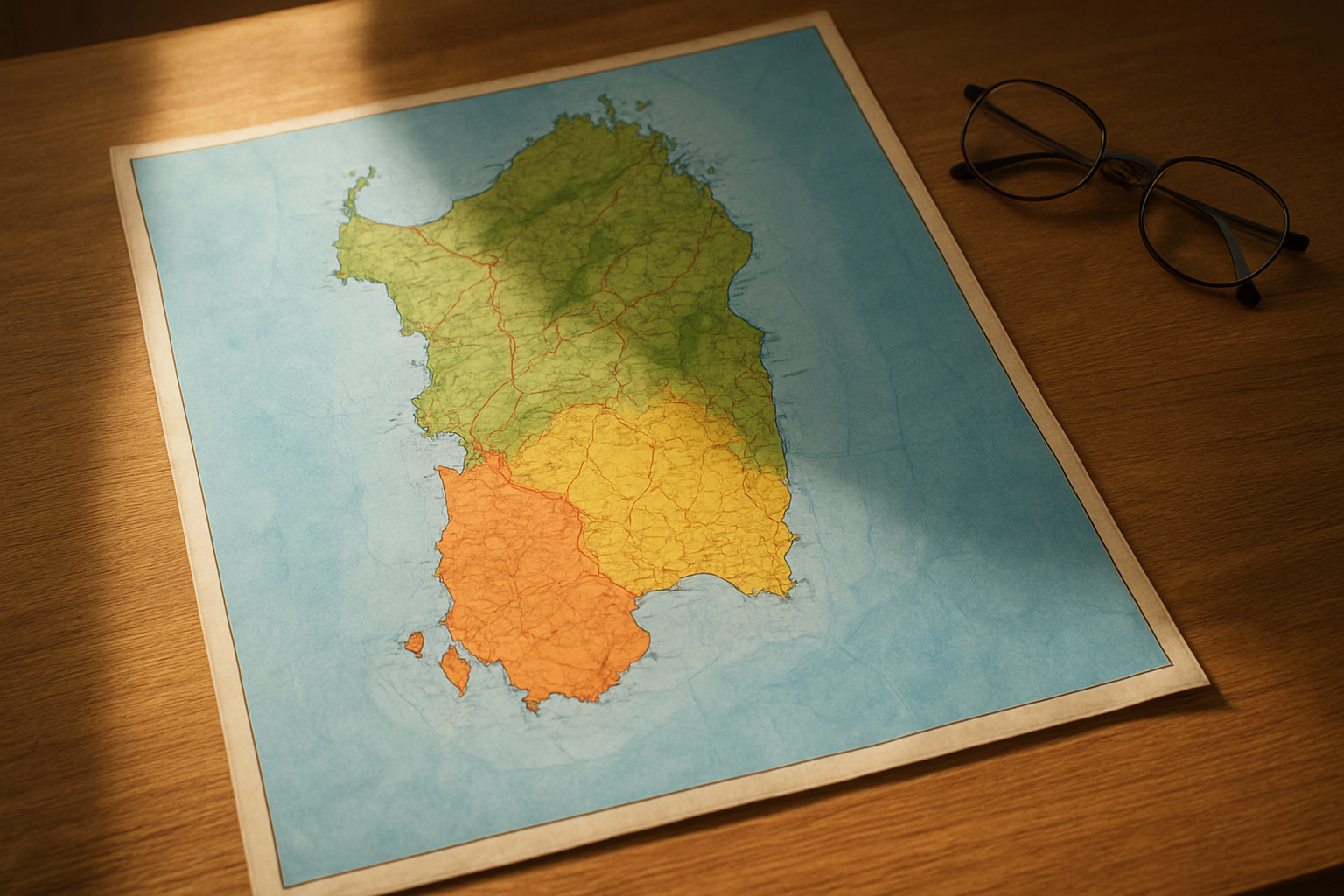
No Foreigner-Only Restricted Zones Exist on the Island
There are no foreigner-specific restricted zones in Sardinia. Whether you're exploring how to buy property in Sardinia as a foreign buyer or comparing options across the island, ownership rules apply equally to everyone — Italian and international buyers alike.
However, certain areas are constrained for all buyers, including:
- Coastal and landscape-protected zones
- Heritage-listed areas
- Hydrogeological risk zones
- Natura 2000 protected habitats
How the Regional Landscape Plan (PPR) Limits Coastal Development Within 2 Kilometers
The PPR is arguably the most important restriction you'll encounter as a foreign buyer in Sardinia's real estate market. It prohibits new construction within 2 kilometers of the shoreline in most areas and requires special authorization even for renovations. Unauthorized extensions can face demolition orders from local authorities.
How to Verify If a Property Falls in a Restricted or Protected Zone
With this in mind, verifying zoning status before committing is essential. Here's how:
| Step | Action |
|---|---|
| 1 | Request a Certificato di Destinazione Urbanistica (CDU) from the local municipality |
| 2 | Check the Regional Landscape Plan (PPR) maps on Sardegna Territorio |
| 3 | Have your notary or geometra confirm the zoning status |
Essential Requirements Before You Can Buy Property in Sardinia
A. Why the Codice Fiscale Is Non-Negotiable for Every Transaction
Before you can buy property in Sardinia, you must obtain an Italian tax identification number — the codice fiscale. Without it, you cannot sign an offer, a preliminary contract, or the final deed. You apply using form AA4/8 through the Agenzia delle Entrate or your nearest Italian consulate abroad, and it typically arrives within days to a few weeks.
B. Whether You Need Residency or a Visa to Complete a Purchase
You do not need residency or a special visa to buy property in Sardinia if you qualify under reciprocity rules or hold EU citizenship. However, note that owning property here grants you no immigration rights whatsoever — a misconception that catches many foreign buyers off guard.
C. How to Buy Remotely Using a Power of Attorney
If you cannot attend the signing in person, you can complete your purchase remotely through a Power of Attorney (procura). This legally authorizes your notary or a trusted representative to sign the final deed on your behalf after proper identity verification.
D. Why Opening an Italian Bank Account Is Strongly Recommended
With this in mind, consider opening an Italian bank account before closing. Notaries strongly prefer traceable payments, and managing ongoing utility bills and local taxes becomes significantly easier with a local account.
How to Protect Yourself From Scams and Title Problems

Most Common Traps Targeting Foreign Buyers in Sardinia
Sardinia ranks among Italy's leading offenders for illegal construction. Developers have built properties violating legal limits, leaving foreign buyers exposed to:
- Demolition orders on luxury villas
- Confiscation of illegally built properties
- Properties that cannot be resold or mortgaged
How to Verify the Seller Is Legitimate Using the Notary System
Before signing anything, confirm the seller holds a valid concession of condonation if the property has any illegal construction history. For new builds, demand the builder provide:
- The official building permit
- The project approved by the municipality
Without these documents, you cannot legally complete the deed.
How to Confirm Land Boundaries With a Licensed Geometra
Illegal construction often involves deviations from approved plans. A licensed geometra can verify whether the physical structure matches the approved project and flag any boundary or volume discrepancies before you commit.
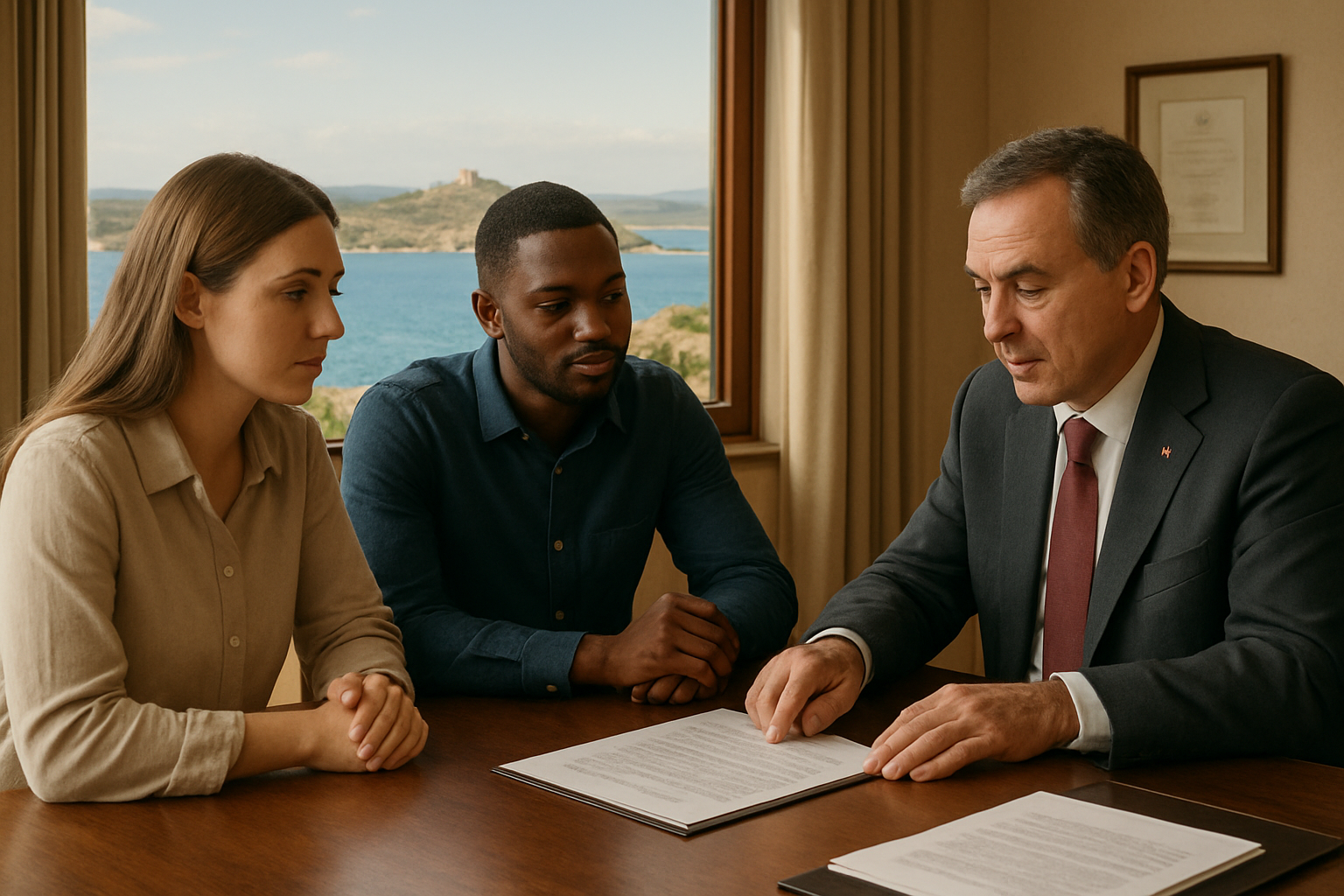
Why You Need Both a Notary and an Independent Lawyer
Now that you understand the risks, relying solely on a notary is not enough. An independent lawyer with Sardinian real estate expertise will:
- Review title history for hidden irregularities
- Identify whether an amnesty applies to existing violations
- Protect your interests in cross-border transactions
Full Cost Breakdown for Buying and Holding Property in Sardinia
A. Purchase Taxes for Second Home Buyers Versus Prima Casa Buyers
When buying property in Sardinia, your residency status significantly impacts your tax burden:
| Buyer Type | Registration Tax (Imposta di Registro) |
|---|---|
| Prima Casa (primary residence) | 2% |
| Second home / foreign buyer | 9% |
For new-build properties, VAT applies instead, ranging from 4% to 22%.
B. Notary Fees, Agency Commissions, and Fixed Registration Costs
Beyond purchase taxes, expect these additional transaction costs:
- Notary fees: 1%–2% of the purchase price
- Agent commission: 3%–6% of the purchase price
- Legal fees: 1%–2% of the property value
C. Hidden Fees That Frequently Catch Foreign Buyers Off Guard
Two costs that routinely surprise foreign buyers:
- Property survey costs: Not legally required, but strongly recommended
- Canone RAI (TV licence): A small but unexpected charge added monthly to your electricity bill (€9/month for 10 months)
D. Ongoing Ownership Costs Including IMU, TARI, and Rental Income Tax
Once you own Sardinia property, annual costs continue:
- IMU: 0.4%–0.8% annually on cadastral value (applies to second homes)
- TARI: Municipal waste tax paid to your local comune
- Cedolare Secca: Flat rental income tax if you let the property
Current Market Conditions and Demand Trends in Sardinia
How Foreign Buyer Demand Has Shifted Since Brexit and Post-Pandemic
Foreign buyer interest in Sardinian real estate has grown significantly. Demand is now rising strongly from Northern Europe, the United Kingdom, and the United States. Notably, Italians living abroad and those earning foreign-source income are also increasingly active—creating a more diversified international buyer pool than ever before.
Average Property Prices Across Sardinia in 2025 and 2026
If you're researching how to buy property in Sardinia Italy, understanding price ranges across the island is essential.
| Province/Area | Average Price (per m²) |
|---|---|
| Gallura Nord-Est (overall) | €3,783 |
| Olbia | ~€3,385 |
| San Teodoro | ~€5,000 |
| Sassari province | ~€3,000+ |
| Medio Campidano | €793 |
| Sardinia regional average | €2,493 |
Prices grew +3.14% year-on-year to July 2026, reflecting steady market appreciation.
How Sardinia Compares in Price to Major Italian Cities
For foreign buyers, Sardinia real estate offers compelling value. Southern Sardinia especially—with prices near the regional floor of €793/m²—remains far more affordable than Rome or Milan, where prime areas easily exceed €6,000–€10,000/m².
With this in mind, next, we'll explore why co-ownership offers a simpler entry point into this growing market.
Why Co-Ownership Is the Simpler Way to Buy Property in Sardinia as a Foreigner
A Fraction of the Purchase Price, the Same Legal Ownership Rights
Buying an entire property in Sardinia as a foreigner means committing hundreds of thousands of euros upfront. Co-ownership lets you buy a deeded share — typically one-eighth — of a premium Sardinian property, giving you the same legal title rights at a fraction of the cost. Palau Piccolo, a 2-bed share in Palau from €119,000, illustrates what that entry point looks like today.
You own real property. You're on the deed. Your share can be sold, inherited, or passed on just like any other real estate asset.
Skip the Bureaucracy — Co-Ownership Handles the Legal Complexity for You
When you buy property in Sardinia as a foreigner, you're navigating:
- Getting your Codice Fiscale
- Finding a compliant notaio
- Structuring taxes correctly for non-residents
- Managing ongoing IMU, utilities, and maintenance
Co-ownership platforms handle all of this on your behalf. You skip the back-and-forth with Italian bureaucracy and get straight to owning.
How MYNE Makes Co-Ownership in Sardinia Turnkey for International Buyers
MYNE structures every acquisition so foreign buyers can participate without legal headaches:
- Vetted properties with clean title and full due diligence completed
- End-to-end transaction management, including notaio coordination
- Ongoing property management covering taxes, maintenance, and scheduling
You show up, enjoy your weeks, and MYNE handles everything else.
Buying property in Sardinia as a foreigner is entirely achievable in 2026, but it requires understanding the rules before you commit. Your eligibility depends on your nationality, the reciprocity agreement between your country and Italy, or whether you hold a valid Italian residence permit. Once you clear that hurdle, you need to secure your codice fiscale, choose a notary, verify the title, and budget for closing costs that typically run between 10% and 15% of the purchase price. Coastal restrictions under Sardinia's Regional Landscape Plan can limit what you can build or renovate, and buying property grants you no immigration rights whatsoever.
The most important thing to take away is that early due diligence protects you far more than anything else. Signing even an initial offer document in Italy can create binding legal obligations, so you should never put money down before verifying planning permissions, checking for encumbrances, and having your contracts reviewed. Working with both a notary and an independent Italian real estate lawyer is not a luxury here — it is the difference between a smooth purchase and a costly dispute. If you want a simpler entry point, co-ownership structures can reduce your exposure while still giving you access to Sardinia's growing property market.