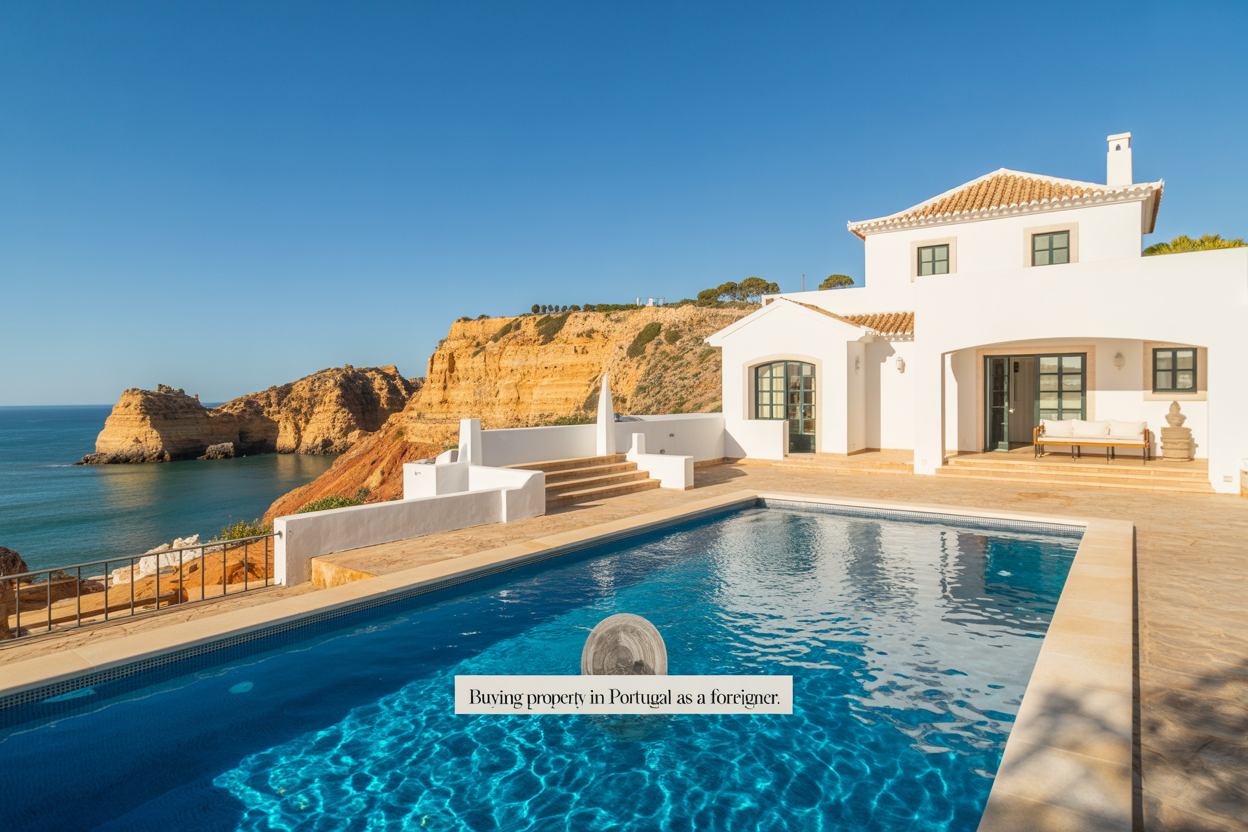
Can Foreigners Buy Property in Portugal? Rules, Taxes and Costs in the Algarve (2026)
If you've been eyeing property in the Algarve, you're not alone. The region draws thousands of international buyers every year — and for good reason. The beaches are real, the lifestyle is genuinely relaxed, and the property market has kept growing even as other European markets have cooled.
The short answer to the big question: yes, you can buy property in Portugal as a foreigner. No restrictions based on nationality, no residency requirement, no hoops to jump through just because you hold a non-Portuguese passport. EU and non-EU buyers buy on the same terms as locals.
But knowing you can buy is just the starting point. The part that catches people out is everything that comes after — how ownership should be structured, what the taxes actually add up to, and where the hidden costs sit that your listing price never mentions.
This guide is for you if you're a non-resident thinking seriously about buying in the Algarve in 2026 — whether that's a holiday home, a rental investment, or somewhere to eventually settle. We'll walk you through whether buying property in Portugal as a foreigner makes sense legally and financially right now, break down the real taxes and costs you need to budget for, and show you exactly how the buying process works step by step — including one ownership model that's making Algarve real estate accessible to buyers who aren't ready to go all in alone.
Why Portugal Is a Smart Choice for Foreign Property Buyers in 2026

A. Resilient Market Growth: Median Prices Up 19.8% Year-on-Year
Portugal's property market continues to reward forward-thinking buyers. According to Statistics Portugal, the national median sale price reached €2,337/m² in Q1 2026—a striking 19.8% increase year-on-year. Foreign investors are paying even more in premium areas, with prices 35% higher than domestic buyers in Lisbon and 17% higher in Porto.
While completed transactions fell 10.5%, this signals that buyers like you are becoming more selective, not less interested—making quality properties in desirable locations increasingly competitive.
B. Lifestyle Benefits: Climate, Safety, and Cultural Appeal
Beyond the numbers, Portugal delivers an enviable quality of life. When buying property in Portugal as a foreigner, you gain access to:
- Sunny weather and a relaxed yet vibrant lifestyle
- Rich cultural heritage and welcoming local communities
- A safe environment ideal for families, retirees, and remote workers
These lifestyle advantages add real, lasting value to your investment.
C. Strategic Location and Political Stability
Your property in Portugal also benefits from the country's strategic position at the crossroads of Europe, Africa, and the Americas—ideal for travel and business. Paired with political stability and policies that actively support foreign investment, Portugal consistently ranks among Europe's most accessible and secure markets for international buyers.
Can Foreigners Legally Buy Property in Portugal
Full Ownership Rights for EU and Non-EU Buyers
Yes, can foreigners buy property in Portugal? Absolutely — and without major restrictions. Whether you're from an EU member state or a non-EU country like the United States or United Kingdom, you have the same right to purchase and fully own property in Portugal. The country has historically welcomed international investors, recognising their positive economic contributions.
No Residency Required to Purchase Property
One of the most attractive aspects of buying property in Portugal as a foreigner is that you don't need to be a resident to buy. You simply need:
- A valid passport or national ID
- A Portuguese Tax Identification Number (NIF), obtainable from a local tax office or legal representative
- Financial documentation proving your funds
That's it. You can complete a purchase entirely as a non-resident.
Limited Restrictions: Military and Protected Zones to Be Aware Of
While the legal framework is broadly open, there are limited geographic restrictions to be aware of. Certain military zones and environmentally protected areas may carry additional purchase constraints or require extra approvals.
With this in mind, when exploring Algarve Portugal real estate or any other region, always engage a qualified lawyer to verify the property's legal status and confirm no zone-specific restrictions apply before signing any contracts.
Best Ownership Structures for Foreign Buyers

A. Personal Ownership: The Simplest and Most Cost-Effective Route
For most foreigners buying property in Portugal, purchasing in your own name is the most straightforward and affordable approach. It works particularly well for a second home or retirement property, minimising administrative overhead and keeping costs predictable.
B. Company Ownership: When It Makes Sense for Portfolios and Rentals
A Portuguese company can be a sensible structure if you're managing a multi-property portfolio, running an active rental business, or undertaking a development project. However, be aware that company ownership introduces:
- Annual accounting and corporate filings
- Corporate tax obligations
- Added complexity on sale or inheritance
Important: Avoid entities domiciled in jurisdictions on Portugal's tax haven blacklist. These structures attract punitive rates — IMT at 10%, IMI at 7.5%, and AIMI at 7.5% — among other penalties. Since Portugal's blacklist changes periodically, always verify the current list before proceeding.
C. Trust Structures: Key Risks and Why Expert Review Is Essential
With this in mind, trusts deserve particular caution. Portugal does not recognise Anglo-American trusts the way common-law jurisdictions do. Using a trust to hold your Algarve Portugal real estate can trigger:
- Tax uncertainty
- Notarial and banking delays
- Inheritance complications
Never use a trust structure without first obtaining dedicated Portuguese tax and succession legal advice.
Portuguese Property Market Prices by Region in 2026
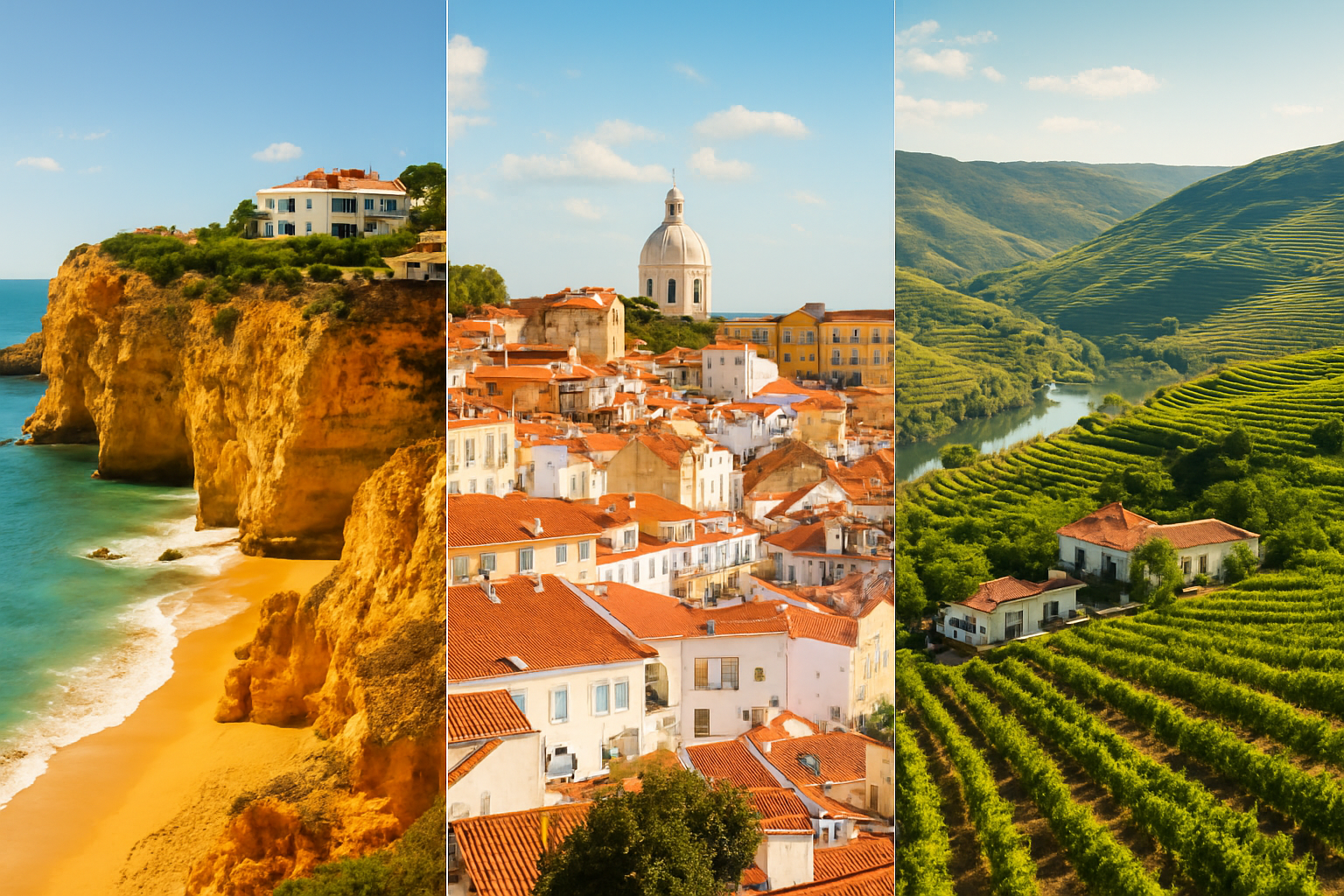
Greater Lisbon: Highest Prices at €3,836 per m²
Greater Lisbon commands the highest property prices in Portugal, reaching €3,836/m² in Q1 2026—up from €3,584/m² the previous quarter. If you're eyeing the capital's most sought-after municipalities, expect even steeper figures:
| Municipality | Price per m² |
|---|---|
| Lisbon | €5,292 |
| Cascais | €5,000 |
| Oeiras | €4,511 |
Year-on-year growth in Greater Lisbon hit +20.5%, driven by employment concentration, international business activity, and strong rental demand.
The Algarve: Strong Values at €3,352 per m² with Coastal Premium
For foreign buyers focused on Algarve Portugal real estate, the region sits at €3,352/m²—Portugal's second most expensive market. Lifestyle demand and an established international buyer base sustain this premium, while limited new completions (down 35.7% in 2025) keep supply tight.
Porto, Madeira, and Emerging Regions: Comparative Price Overview
With the above in mind, here's how the remaining key regions compare:
| Region | Price per m² | Annual Growth |
|---|---|---|
| Setúbal Peninsula | €2,996 | +29.9% |
| Madeira Islands | €2,863 | +18.6% |
| Porto Metropolitan Area | €2,552 | +16.9% |
| National Median | €2,337 | +19.8% |
Emerging cities like Braga (€2,240/m²) and Guimarães (€2,108/m²) offer notably lower entry points with strong growth momentum.
Top Locations to Buy Property in Portugal
A. Lisbon: Urban Investment With Record Neighbourhood Prices
With over 10,253 properties listed, Lisbon remains one of Portugal's most searched markets for foreigners buying property. You'll find everything from renovated apartments to luxury penthouses, backed by Portugal's position as a global leader in house price growth as of 2026.
B. The Algarve: Holiday Homes, Villas, and Year-Round Rental Demand
The Algarve dominates Portugal's property listings with over 18,620 properties available, making it the top destination for algarve portugal real estate. Whether you're eyeing Lagos (2,001 listings) or Vilamoura, part of the Loulé municipality (1,536 listings), you'll discover strong holiday rental demand that supports year-round income potential.
C. Porto: Historic Charm With Strong Investment Returns
Porto attracts serious buyers looking beyond Lisbon. With 1,072 active real estate agents and major firms like JLL Residential Portugal operating locally, your investment is supported by a deep professional network and a thriving property market.
D. The Silver Coast: Affordable Alternative With Growth Potential
Known on idealista as Costa de Prata, the Silver Coast offers you a more accessible entry point compared to Lisbon or the Algarve. If buying property in Portugal as a foreigner is your goal and budget matters, this region deserves a serious look.
Types of Property Available to Foreign Buyers
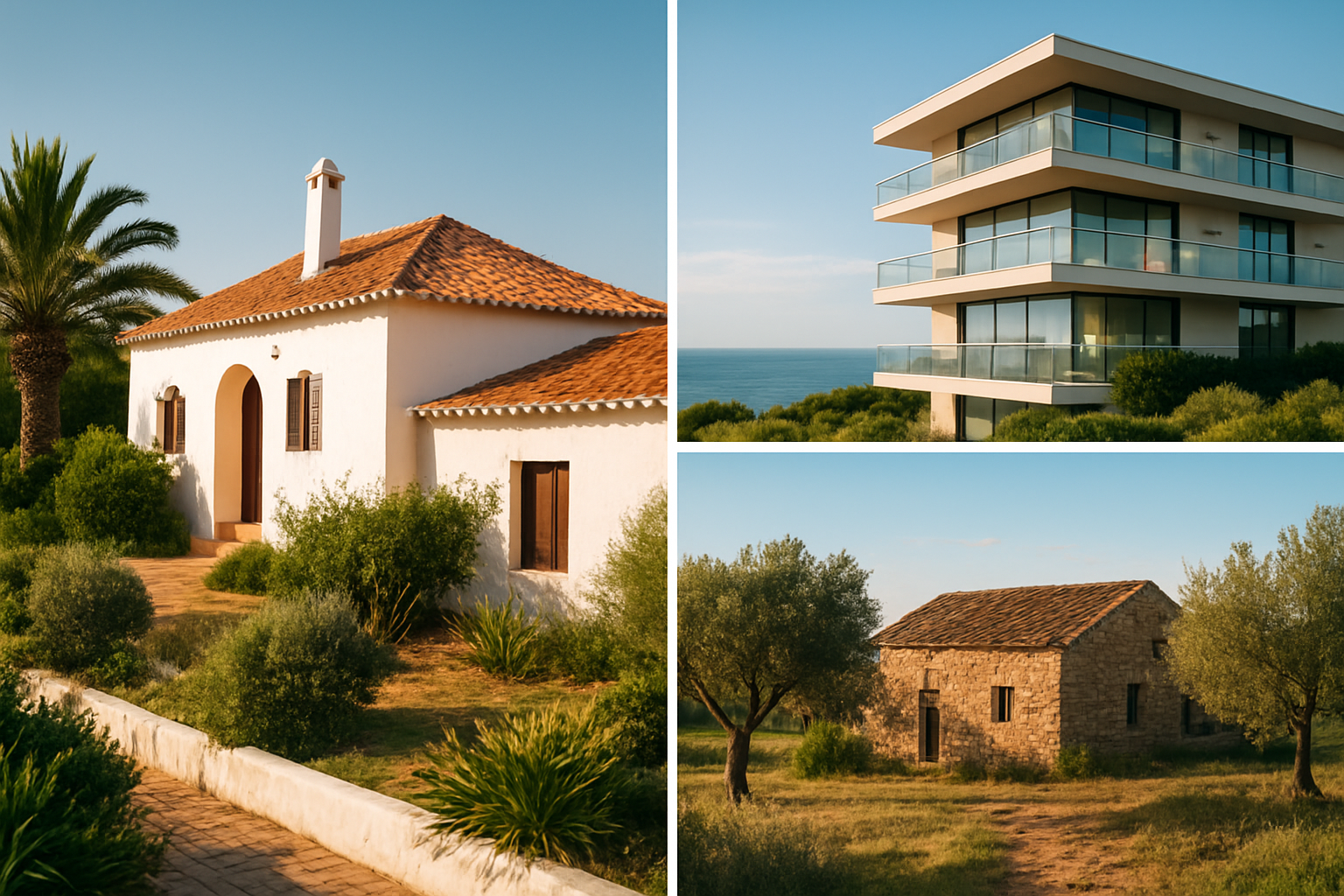
Apartments, Villas, and Detached Houses
When buying property in Portugal as a foreigner, you'll find a broad mix of property types across the country. In cities and built-up areas, apartments are the most common option. Villas and detached houses are more readily available in suburban developments, coastal towns, and rural villages. The Algarve, in particular, offers a strong mix of older properties and modern new-build condos fuelled by rising demand from foreign buyers.
Quintas, Townhouses, and Off-Plan Developments
Beyond standard apartments and villas, your options also include:
- Quintas – traditional Portuguese farmhouses or estates, typically found in rural areas
- Townhouses – terraced properties common in historic town centres
- Off-plan developments – new constructions purchased before completion, popular along the Algarve coast and in Lisbon's expanding suburbs
- Land – available if you want to build your own home from scratch
Understanding Portuguese Apartment Terminology (T0, T1, T2)
Portuguese listings use a simple bedroom classification system you'll encounter regularly in Algarve Portugal real estate searches:
| Code | Meaning |
|---|---|
| T0 | Studio (no separate bedroom) |
| T1 | 1 bedroom |
| T2 | 2 bedrooms |
| T3 | 3 bedrooms |
The number after "T" always refers to the number of bedrooms, making it straightforward to filter listings quickly.
Step-by-Step Guide to Buying Property in Portugal

Obtaining Your NIF Number and Opening a Portuguese Bank Account
Your first step when buying property in Portugal as a foreigner is obtaining a Portuguese Tax Identification Number (NIF). This is mandatory for all fiscal activities, including property transactions and opening a bank account. You can get your NIF through a local tax office or a legal representative.
Hiring Legal Representation and Conducting Due Diligence
Next, hire a qualified lawyer familiar with Portuguese property law. Your legal representative will review contracts, verify the property's legal status, and confirm it's free from debts or undisclosed issues — protecting your interests throughout the process.
Making an Offer and Signing the Promissory Contract (CPCV)
Once you've found your ideal Algarve Portugal real estate or elsewhere, submit a formal offer through your agent. If accepted, you'll sign the CPCV (Contrato-Promessa de Compra e Venda) — a preliminary agreement outlining sale terms, typically accompanied by a deposit.
Completing the Final Deed and Registering Ownership
With the CPCV in place, the final stage is signing the Escritura Pública before a notary — the official ownership transfer. Afterward, you must register the property in your name at both the Land Registry and the Tax Office.
Taxes and Costs Every Foreign Buyer Must Budget For

A. Property Transfer Tax (IMT): Rates Based on Value and Property Type
When buying property in Portugal as a foreigner, IMT is your first major cost. Paid before signing, rates run 0%–8% for urban residential properties on a progressive scale. Rural properties attract a flat 5%, while commercial properties pay 6.5% regardless of location.
B. Stamp Duty, Notary, and Registration Fees
On top of IMT, you'll pay stamp duty (Imposto de Selo) at 0.8% of the property value at deed signing. If you take out a Portuguese mortgage, additional stamp duty applies — 0.6% for loans over five years or 0.5% for shorter terms.
C. Annual Municipal Property Tax (IMI) and Wealth Tax (AIMI)
Once you own your Algarve property, annual IMI applies:
| Property Type | IMI Rate |
|---|---|
| Urban | 0.3%–0.45% |
| Rural | 0.8% |
If your property exceeds €600,000, AIMI kicks in at 0.7% (individuals), rising to 1% above €1 million. Couples filing jointly only trigger AIMI above €1.2 million.
D. Legal Fees and Ongoing Compliance Costs
Your legal and compliance costs typically include solicitor fees and your fiscal representative's charges — mandatory for non-EU buyers maintaining a Portuguese NIF. Budget accordingly to avoid penalties.
Common Pitfalls and How to Avoid Them

Hidden Structural Issues and Undisclosed Property Debts
Before signing anything, have your lawyer verify:
- Outstanding condominium debts
- Valid habitation license (licença de utilização)
- Clean title at the Land Registry
- Renovation costs — a full reform of a 90 sqm apartment runs €1,200–€2,200/sqm and often exceeds initial quotes by 40%
Legal Complexities Without Professional Guidance
Every horror story begins the same way — skipping independent legal representation "to save 1%." Never rely on the seller's notary as your only legal contact. Your lawyer should complete all title checks, debt verification, and license confirmation during the 7–15 day refundable window after reservation.
Wiring deposits before due diligence completes is one of the costliest mistakes you can make when buying property in Portugal as a foreigner.
Language Barriers and Cultural Misunderstandings
Key documents — including the CPCV and escritura — are read aloud in Portuguese at closing. Ensure your lawyer translates and explains every clause before you sign.
Navigating Market Fluctuations and Selective Buying Conditions
With this in mind, avoid assuming central Lisbon will continue appreciating at 2018–2022 rates. For stronger yields, focus on Porto, Setúbal, or Faro. In the Algarve, prioritize Lagos and Tavira over saturated central strips like Albufeira.
Why Co-Ownership Is the Easiest Way for Foreigners to Buy in the Algarve

Full Legal Ownership, Without Navigating It Alone
Buying property in Portugal as a foreigner is absolutely legal — but the paperwork, legal checks, and coordination can feel overwhelming when you're doing it from abroad. Co-ownership platforms handle the legal structure for you. Your share is registered under Portuguese law, giving you real title to the property without you having to manage solicitors, notaries, and registrations solo.
Lower Capital at Risk, Same Real Property Rights
Algarve Portugal real estate carries premium price tags. A full villa can run €1M+, which puts it out of reach for many buyers. Co-ownership lets you buy a fraction — typically one-eighth — at a proportional cost, while still holding deeded ownership. Villa Maresia, a 4-bed share managed by MYNE in Albufeira, illustrates this at €399,000 for a 1/8 share. You get the same legal protections as any sole owner, just with shared costs.
No Guesswork on Taxes or Ongoing Compliance
- IMT, IMI, and stamp duty are calculated and handled proportionally on your behalf
- Annual tax filings and compliance checks are managed through the ownership structure
- NIF registration and fiscal representation are typically included in the onboarding process
For foreigners asking can foreigners buy property in Portugal — the answer is yes, and co-ownership makes the entire process straightforward, cost-efficient, and legally sound from day one.

Portugal remains one of the most accessible and rewarding countries in the world for foreign property buyers. Whether you are an EU or non-EU national, you can legally purchase freehold property on the same terms as Portuguese nationals, with no residency requirement and a clear, well-established buying process. From obtaining your NIF and opening a Portuguese bank account to signing the final deed before a notary, each step is manageable with the right professional support. The key is to budget accurately for all associated taxes and costs — including IMT, stamp duty, notary fees, and annual IMI — and to choose an ownership structure that suits your personal and financial situation.
The Algarve, with its robust property market, year-round appeal, and some of the highest median prices in Portugal, continues to stand out as a prime destination for foreign buyers. If the full purchase price feels out of reach, co-ownership offers a practical and increasingly popular route into this desirable market. Whichever path you choose, your most important step is to engage qualified Portuguese legal and tax advisors before you commit to anything. The opportunities are real and well within your reach — the right preparation is what turns a sound decision into a smart one.